

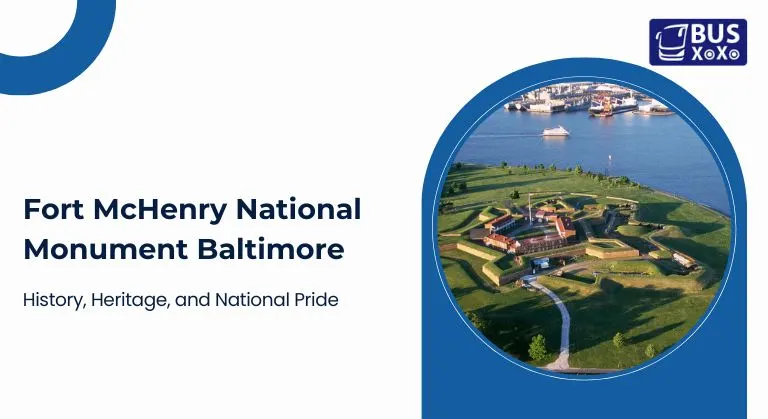
The American will to endure and love the country is epitomized in the Shinichi for Fort McHenry National Monument, which serves as a hallmark of this heritage. Fort McHenry is especially famous for being the location of the creation of “The Star-Spangled Banner,” following a lengthy time of maritime warfare during the War of 1812, in which British forces assaulted the fort with overwhelming force, but failed to conquer it. The bombardment by cannons and artillery from great distances led Francis Scott Key to pen the poem that would establish the creation of our nation’s anthem.
Fort McHenry has become a physical representation of the values of a young country committed to safeguarding its independence as it continues to preserve that legacy and honour through its historic buildings, interpretive exhibits, and ceremonies in order to allow visitors to reflect upon the courage, fidelity, and national pride that have become synonymous with American culture today.
Historical Background
The fort is an important place in history and people know it for the fort became a symbol of something that people think about the fort when they think about the city and the fort are like two things that go together. In 1798, construction began on a permanent structure named after James McHenry, a Baltimore native who served as George Washington’s Secretary of War.
The fort was famous for its defense of Baltimore when the war was on the rampage in 1812 when a British ship attacked and was fought back by weaker and minimal force. In 1812 13 September British warships started the air raid on the fort. Over 1,500 iron booms
and rockets landed around 25 hours long. While observing the attack from truce ship lawyer francis scott key was inspired by the sight of the massive 30 by 42 foot garrison flag still flying at dawn’s early light on September 14. “The defense of fort McHenry” that poem was written by him and after a long time it became the U.S. National anthem in 1931 and we know it as The Star-Spangled Banner.
During the civil war in 1861 to 1945 the fort served as a union prison for Confederate soldiers and Marylanders suspected of pro secessionist activities. Thousands were taken in custody there, including the grandson of Francis Scott Key. In 1917 or in 1923 ground became the huge military treatment facility in the country at the time treating more than thirty-thousand wounded Soldiers
McHenry was established as a national park in 1925 and In 1939 it was recreated as a National Monument and Historic Shrine, making it the only site in the U.S. National Park system to hold both the titles National Park and National Preserve.
The Battle That Inspired The Star-Spangled Banner
The battle which inspired the U.S. national anthem was the battle of Baltimore, particularly the air raid by Fort McHenry at the war in 1812. British ships launched a continuous 25-hour assault, firing between 1,500 and 1,600 shells and around 650 rockets at the fort. Without being affected by the heavy fire or air raid, American forces under Major George Armistead took the temporary responsibility of the fort forcing the British fleet to withdraw in the morning of 14 September.
Francis Scott Key was a lawyer who visited the battle from a British ship at the age of 35 years. He had boarded the vessel to negotiate the release of Dr. William Beanes but was detained to prevent him from notifying American forces of the strategy.
The Moment of Inspiration was from the smoke of dawn on September 14, Key saw the massive 30 by 42 foot American flag sewn by Mary Pickersgill still flying over the ramparts. This signaled that the fort had not surrendered. The Poem Moved by the sight, Key began jotting down verses on the back of a letter. He originally titled the four stanza poem ‘Defence of Fort McHenry’.
After civil war
In the end of the civil war Fort McHenry returned to restful and pointless existence and his primary goal seems to be a parade ground. During the Spanish American war in 1898 Fort McHenry once again became a training recruit. In 1912 he didn’t have any active soldiers on duty and two years later congress approved the transformation in the city park.
Exploring fort Mchenry (key areas to visit)
There are several things At Fort McHenry like national monuments and historic shrines it would not take much time to explore approximately 5 km from the center. You can explore the historic star-shaped fort inspired by the American national anthem The Star-Spangled Banner. Visitors can tour original 19th-century buildings, participate in daily flag programs, and enjoy recreational trails along the Baltimore Harbor here are some places :-
- The star fort
- Seawall trail
- Francis scott key monument
The star fort
This is the 5 pointed star shaped fort where we can see the beautiful views and we can also feel the war period and what was the circumstances from the soldiers perspective it was constructed as a defensive structure between 1799 to 1802. This was the birthplace of the U.S. national anthem.
Seawall trail
Fort seawall trail is a 1.609 km long walkway which creates a loop around the peninsula. Tourists and visitors can view cherry blossoms, the Baltimore harbor at work, and monuments. You can visit all these things and the park has no charge for visitors.
Francis scott key monument
It was constructed in 1802 to save the Port of Baltimore; it was the only fort ever made as a National Monument and Historic Shrine. Visitors can spend time near the star-shaped fort, and they can enjoy simulation like cannon firings, ranger talks, flag talk and many more things you can do.
Visitor Information & Tips (Best time of year to visit)
The best time to visit the Fort McHenry national monument of Baltimore is in the summer because they do a lot of functions like ranger talks, drumming and weapon presentation with comfortable temperature while walking in the ground.
There are some events you can attend :-
- Flag change programs :- Fort McHenry Monuments daily performs flag changing programs 10 to 15 minutes at 10 a.m. and 4 p.m. in summer 5 p.m.
- American Bastille :- You can join the ranger and explore the role of McHenry saving Maryland for the union during the Civil War.
- Ranger choice’s program :- Daily Ranger Led Activities at Fort McHenry National Monument and Historic shrine its duration will be 30 to 50 minutes.
- Flag talk :- In the flag talk ceremony we talk about the history of the flag, design and importance of the flag.
- Weapon demonstration :- In weapon demonstration we study about war weapons of 1812 in this program firing also included.
- Battle of Baltimore :- This is a 50 to 60 minutes program in which we saw how they survived the 25 hours long bombardment and explosive shells.
- Drum music demonstration :- It is a 10 to 15 minutes program performed by drum corps and you feel the historical interpretation on the drill square.
- War of the Chesapeake :- This is a Free 45 minutes program in which we will attend a dramatic show of the Chesapeake campaign war of 1812.
Fees & passes
All the visitors must have one of these passes otherwise they will not allow you to enter the fort McHenry Monument.
| Pass | Price |
| Standard pass | $15.00 |
| Annual pass | $45.00 |
| America the beautiful pass | $80.00 |
- It is free only for on duty military, veterans, gold star families and 4th grade students
- They will not accept cash
- Use only credit and debit card to pay
- No pre-booking allow
Conclusion
We know it is the birthplace of the U.S. national anthem Fort McHenry Monument and historic shrine in Baltimore and it stands as an essential preserved symbol of American resilience. They successfully survived the 25 hours long bombardment or air raid against the British in 1814 it inspired Francis scott key’s “star spangled banner” solidifying its position as a cornerstone of national identity. Appointed both a national monument and historic shrine, a signature attribute that remains to the war of 1812 the Civil War and the nation’s unforgivable kind spirit.