Murphy, in the far southwest corner, to Manteo on the Outer Banks is a drive of more than 500 miles. Along the way the land falls from the highest peak east of the Mississippi to sea level, and the right bus, the right route and even the right departure time change with it. Here is how we plan charter trips in each of North Carolina's three regions.
The Mountains
Asheville, Boone, Blowing Rock, Cherokee, Waynesville, Brevard, Highlands
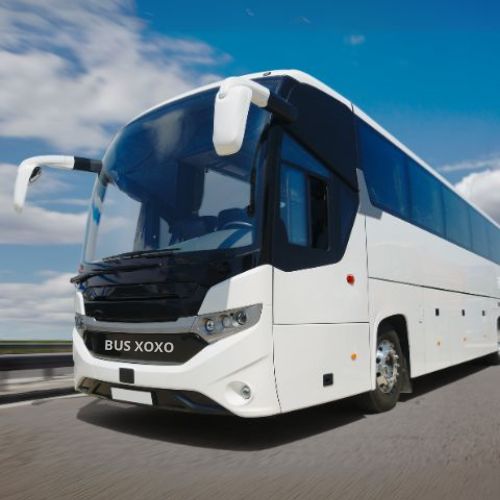
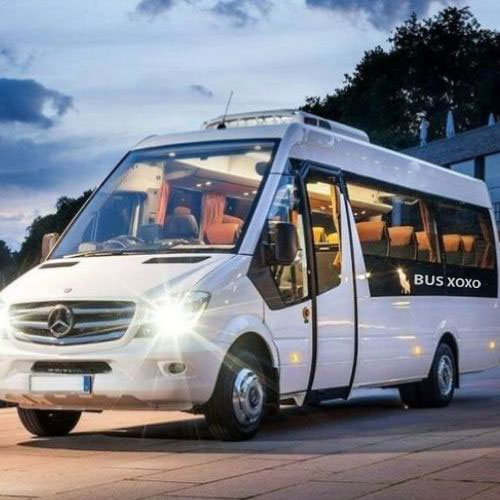
Grades and switchbacks are the story here. I-40 climbs through the Pigeon River Gorge toward Tennessee, I-26 crosses the state line toward Johnson City, and most trips to waterfalls, ski slopes and overlooks finish on two-lane roads. A full-size coach handles these routes well with a driver who knows them, but tight hotel lots in old mountain towns and small trailhead parking often favor a minibus or Sprinter van.
The Blue Ridge Parkway needs its own plan. The National Park Service counts 25 tunnels on the North Carolina section. Many clear 14 feet at the edge line, but the lowest, near Cherokee at the southern end, sit between about 10½ and 11¼ feet at the edge. Most motorcoaches stand 11 to 12 feet tall, so we keep coaches on Parkway segments whose tunnels clear and use parallel US routes for the rest. The NPS publishes every Parkway tunnel height and the current road status and closures. Storm damage and repaving have kept some sections shut for long stretches, so we check before every mountain trip.
Weather moves fast at elevation. October leaf season fills overlooks and Asheville hotels, and winter can bring ice on high roads when the Piedmont only sees rain. Build in buffer time, and ask riders who get carsick to sit near the front. Our tips for motion sickness on a bus help on curvy roads.
The Piedmont
Charlotte, Raleigh, Durham, Chapel Hill, Greensboro, Winston-Salem, High Point, Concord
Most North Carolinians live in this rolling middle band, and most charter trips start here. Three interstate spines tie it together: I-85 runs from Charlotte through the Triad to Durham, I-40 links the Triad to the Triangle, and I-77 heads north out of Uptown Charlotte. The roads are easy for a coach. The timing is not. Weekday rush hour around Uptown and on the Triangle's I-40 belt can add half an hour or more, so we set pickup times that dodge the worst of it.
Big venues here have their own bus rules. Stadiums, arenas and convention centers usually assign a staging or drop-off zone for charter buses, and that zone can be a few blocks from the entrance. We confirm it with the venue and tell your group exactly where the bus will wait. Our pickup and parking guidelines explain what venues and hotels typically allow.
This is also where college sports and racing traffic peaks. A Duke and UNC game, an NC State home weekend or a race at Charlotte Motor Speedway in Concord fills nearby hotels and slows every exit, so book those dates early.
The Coastal Plain and Outer Banks
Wilmington, Wrightsville Beach, Jacksonville, New Bern, Greenville, Beaufort, Kitty Hawk, Nags Head
The east is flat and wide, and distance is the main cost driver. I-40 ends in Wilmington and I-95 crosses the eastern half north to south, but much of the coast is reached on four-lane US highways such as US-64 and US-17. The Outer Banks have no interstate at all. Buses arrive over the bridges on US-64 from the west or on US-158 from the north.
Summer weekends on the barrier islands are their own puzzle. Many vacation rentals turn over on Saturdays and Sundays, and bridge traffic can back up for hours. For group trips we suggest weekday travel or early departures. Beach-access lots are rarely built for a 45-foot coach, so we plan drop-offs at hotel or attraction lots and confirm where the driver can wait.
Hurricane season runs from June 1 to November 30. We watch National Weather Service forecasts before coastal trips and talk through new dates if a storm threatens. Our return and refund policy explains how changes work.