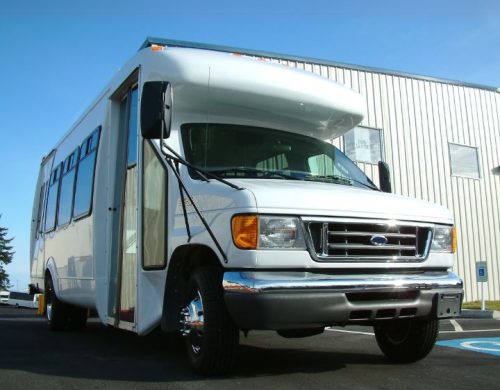
Shuttle Bus Rental with a Professional Driver for Groups of 14 to 40
A shuttle bus does one job better than any other vehicle in our lineup: it moves people back and forth, again and again, on a short route that has to run on time. Hotel to convention center. Remote parking to the stadium gate. Terminal to the resort. Office park to the train station every weekday morning.
BUSXOXO books shuttle buses with licensed drivers through a nationwide network of vetted partner operators, for a single afternoon, a three-day event, or a contract that runs all year. You tell us the stops, the head count and the hours. We size the fleet, plan the loop and keep it running.
Hourly, daily or contractOne trip or a standing schedule
Wheelchair lift on requestAsk when you book
24/7 trip supportA real person on the phone
A typical event loop: four stops, about 30 minutes per lap, two shuttles running 15 minutes apart. Every route we plan starts as a sketch like this.
What you are actually renting when you book a shuttle bus
The word "shuttle" describes how a vehicle is used as much as what it is. In our fleet, a shuttle bus means a mid-size bus with 14 to 40 forward-facing seats, usually built on a heavy-duty truck chassis rather than the full-length frame of a full-size charter bus. That build gives it a tighter turning circle, a lower purchase and running cost, and a single wide front door that lets people step on and off quickly. Those three traits are exactly what short, repeated trips need.
What a shuttle trades away is long-haul comfort. Most shuttles have no restroom, less legroom than a motorcoach and interior luggage space instead of a large under-floor bay. For a 15-minute hop between a hotel and a venue, nobody notices. For a four-hour highway run, your group will, and we will tell you so before you book.
Generic diagram for orientation. Exact layout, door count and luggage space vary by model and operator.
Shuttle bus spec sheet
Seats
14 to 40 passengers, most commonly 24, 28 or 32
Length
About 25 to 40 feet, which fits standard hotel porte-cocheres and most curbside loading zones
Entry
One wide front door; some models add a rear door or a lift door
Luggage
Overhead or rear racks inside the cabin; enough for carry-ons, tight for 30 large suitcases
Restroom
Rare on shuttles; plan stops if the ride is longer than about 90 minutes
Accessibility
Wheelchair lift or ramp models available in many markets on request
Climate
Air conditioning and heating as standard
Driver
Commercial driver with a passenger endorsement, supplied with every rental
Why the driver matters: any vehicle built to carry 16 or more people, driver included, needs a commercial driver's license under federal rules, which is why you rent a shuttle bus with a driver rather than self-drive. You can read the licensing basics on the FMCSA commercial driver's license page. If your group is under 15 and you only need one ride, a 15 passenger van rental or a Sprinter van may be the simpler fit.
Choose by seat count, then check the luggage
Operators name their shuttles differently, so "mid-size shuttle" in one city can be "minibus" in another. The number that never lies is the seat count. Tap a size below to see who it suits, how much it can carry and when a different vehicle makes more sense. As a rule, book about 10 percent more seats than your head count on any trip with luggage, strollers or event gear, because a bag on a seat is a seat nobody can use.
seats
seats
seats
seats
seats
seats
seats
14 passenger shuttle bus
Small, nimble, executive-friendly
The 14 seat shuttle is the bridge between a van and a bus. It suits a board meeting arriving by air, a bridal party moving between photo spots, or a small department heading to an offsite.
Luggage: one suitcase and one carry-on per person in most models
Good for: airport meet-and-greet, VIP transfers, small wedding parties
Consider instead: a Sprinter van rental if you want leather seats and more headroom
20 passenger shuttle bus
The hotel-shuttle standard
Twenty seats is the size most hotels and car rental lots use for their own courtesy shuttles, which tells you something: it fits under low canopies, loads quickly and still moves a meaningful crowd per lap.
Luggage: rear rack for 12 to 15 large bags on many models
Good for: hotel-to-venue loops, rehearsal dinners, small team travel
Twenty-four seats balances cost and capacity for most corporate and wedding work. Two of these running opposite each other on a loop will usually outperform one larger bus, because guests wait half as long.
Luggage: carry-ons comfortably, airport loads with planning
Good for: wedding guest shuttles, conference loops, church events
Consider instead: minibus rental if the ride is over an hour each way
28 passenger shuttle bus
Built for park-and-ride
At 28 seats you can clear a remote lot fast without a vehicle that struggles in tight parking aisles. Many 28 seat shuttles have room for a few standing riders on private property routes, but we always plan on seated loads only.
Luggage: day bags and coolers; limited for suitcases
Good for: stadium and festival lots, campus events, employee runs
A 32 seat shuttle handles peak surges at conventions and large weddings. It is long enough that we check every stop for turning room before we commit it to a route.
Luggage: overhead racks, limited rear space
Good for: convention center loops, large wedding venues, employee contracts
Consider instead: two 20 seat shuttles if your pickup point is tight
36 passenger shuttle bus
Big group, short hop
Thirty-six seats suits a busy hotel block or a school group crossing town. Beyond about 45 minutes of riding, most groups this size are happier on a coach with reclining seats.
Luggage: day packs and instrument cases
Good for: field trips across town, team transport, campus moves
Consider instead: a school bus rental for budget-first student trips
40 passenger shuttle bus
The top of the shuttle range
Forty seats is the largest shuttle most partners run. Above that, a coach is usually cheaper per seat and far more comfortable, especially with luggage.
Luggage: limited; ask about a separate luggage van for airport runs
Good for: high-volume event loops, large employee shifts
Shuttle planning is a timing problem, not just a seating problem. One 28 seat shuttle can move 300 guests, but if each lap takes 30 minutes, the last guest boards about five hours after the first. Add a second shuttle and the wait drops by half. That trade between fleet size and waiting time is the most important decision you will make, and it is the first thing we work out with you.
The three numbers that decide it
Lap time is the full round trip: drive out, unload, drive back, load again. Planners almost always underestimate loading. A full shuttle takes several minutes to fill when guests carry bags or ask questions, so we build in four to six minutes per stop.
Headway is the gap between shuttles at any one stop. Divide lap time by the number of shuttles. Under 15 minutes, guests stop checking their watches. Over 20, they start calling for rideshares.
Peak demand is the busiest half hour, not the daily total. A wedding with 180 guests does not need 180 seats at once until the reception ends. Then everyone wants to leave within 30 minutes, and that final wave is what decides your fleet size. Our post on wedding shuttle vs charter bus covers exactly this end-of-night surge.
Try your own numbers. The calculator gives a planning estimate; your quote is based on the real route, traffic and venue rules.
Round trip, including loading
Shuttle bus rental cost: what you pay and why
Most shuttle work is priced by the hour with a minimum block, because the vehicle and driver are committed to you for the whole window whether the shuttle is moving or waiting at a curb. Multi-day events are often quoted as a daily rate, and recurring commuter routes as a contract based on service hours per week. The ranges below are our current typical bands; your quote reflects your city, dates and route.
How it is billed
Typical range
Best for
Hourly, with a minimum
$110 to $250
Weddings, game days, single-day events
Full day
$1,100 to $2,000
Conferences, festivals, long event days
Minimum booking
3 to 5 hours
Varies by market and day of week
Recurring contract
Quoted
Employee, campus and hotel routes
Ranges are for a 14 to 40 passenger shuttle bus with driver and vary by season, city and availability. Saturdays from April through June and December holiday weeks book fastest and price highest.
What a clear shuttle quote lists
Vehicle and driver for the booked hoursIncluded
Fuel and standard insuranceIncluded
Deadhead time to and from the garageAsk
Tolls, parking and venue access feesUsually extra
Wheelchair lift vehicleOn request
Driver gratuityCheck if included
Overtime past booked hoursHourly rate
Four things that move the price most
Hours, not miles. A shuttle that drives 40 miles in a day but stays on duty for 8 hours is billed for 8 hours. Tightening your service window by even one hour at each end saves more than any other change.
Peak dates. Wedding season, graduation weekends and big conventions pull every shuttle in a city into service. Booking six to eight weeks ahead for those dates gets you more choice and steadier pricing.
Fleet split. Two 24 seat shuttles can cost more per hour than one 50 seat coach, yet they cut waiting time in half. We will show you both options so you can decide where the money is better spent.
Split shifts. An employee route that runs 6 to 9 a.m. and 3 to 6 p.m. may be quoted as two blocks or as one long day, depending on the operator. Ask for both.
Wedding guest loop
1 shuttle x 6 hours
One 24 seat shuttle runs hotel to ceremony, then ceremony to reception, then late returns. At a mid-range hourly rate this lands in the high hundreds to low thousands before gratuity. Couples often add a second shuttle only for the last hour.
Three-day conference
2 shuttles x 3 daily rates
Two 32 seat shuttles loop three partner hotels and the convention hall from 7 a.m. to 7 p.m. Daily rates keep the math simple, and a third shuttle can be added for opening morning only.
Weekday employee route
Service hours x weeks
A 28 seat shuttle connects a train station to an office campus twice a day. Contract pricing is based on weekly service hours and is reviewed as ridership grows.
An airport transfer and a festival park-and-ride both use a shuttle bus, but almost nothing else about them is the same. The timing, the pickup rules and the thing most likely to go wrong all change. Pick the job closest to yours to see how we plan it.
Employee shuttle service
A commuter shuttle succeeds or fails on one thing: whether people trust it enough to leave their car at home. That trust comes from the same driver, the same stops and the same departure times every single weekday. We plan these routes around train arrivals, shift changes and parking pressure, then lock in a schedule your team can memorize.
What we plan for
Departures timed to transit arrivals, with a few minutes of grace for late trains
A consistent driver pool so riders recognize who is picking them up
Monthly ridership counts so you can resize the vehicle before you overpay
Airports run on rules: designated commercial pickup zones, dwell-time limits and, at many terminals, permits for the operator. The real risk is not the drive, it is the 40 minutes between wheels-down and a full bus at the curb. We track flight arrivals, put a greeter with a sign at baggage claim when you want one, and stage the shuttle where the airport allows until your group is actually outside.
What we plan for
Flight numbers for every arriving cluster, not only the first flight
Luggage per person, so the seat count includes room for bags
A second pickup wave for delayed flights instead of one long wait
Wedding guests are dressed up, often unfamiliar with the area and, by the end of the night, not driving anywhere. A wedding shuttle bus keeps them together, gets them to the ceremony before the bride and brings them back to the hotel safely. The tricky part is the last hour, when nobody wants to leave until suddenly everybody does.
What we plan for
An early run for family and the wedding party, separate from guests
A posted return schedule, with the final departure 15 minutes after the last song
A named contact at the venue so the driver knows exactly where to stage
Convention shuttles follow the agenda. Attendance is heaviest before the opening keynote, steady through the day and spiky again at evening receptions. We build the schedule around your session times, run tighter intervals during the morning rush and drop to a lighter rotation in the afternoon so you are not paying for empty laps.
What we plan for
One pickup point per hotel, signed with your event branding
Shuttle intervals that change with the agenda instead of one fixed timetable
A dispatcher contact your staff can reach when a session runs late
Park-and-ride is the classic shuttle job: a remote lot, a gate, and thousands of people who all leave at the same moment. Venues and police usually control where buses may stop, so we confirm the approved loading zone before anything else. Then we size the fleet for the exit surge, not the arrival trickle.
What we plan for
Venue-approved loading and staging zones, in writing
A queue plan with a staff member managing the line at the gate
Extra vehicles for the final 45 minutes after the event ends
Universities rent shuttles for orientation week, game days, graduation and research sites that sit miles from main campus. Schools use them for field trips across town and for teams too large for vans. Student trips come with extra paperwork, so we provide operator safety details and insurance certificates up front for your district or risk office.
What we plan for
Insurance certificates and operator details ready for approval forms
Chaperone seats counted in the total, not added later
Congregations rent shuttles for overflow parking on holidays, for youth retreats and for conferences that span several venues. Many churches also run a weekly route for members who no longer drive. Gentle boarding, a patient driver and an accessible vehicle often matter more here than any amenity.
What we plan for
Lift-equipped shuttles when members use wheelchairs or walkers
Short loops between overflow lots and the main entrance on peak services
Retreat pickups from several meeting points on the same morning
Shuttle bus, minibus, van or motorcoach: an honest comparison
We rent all of these, so we have no reason to push you toward the shuttle when something else fits better. The table compares the five vehicles groups most often weigh against each other. Distance and luggage usually decide it faster than price.
Budget comes first on a short student or camp trip
Shuttle vs motorcoach
A coach wins on comfort and luggage the moment you leave town. A shuttle wins on frequency: three shuttles can serve a loop with five-minute waits where one coach would leave people standing for 25 minutes. Read the full breakdown in shuttle bus vs motorcoach.
Shuttle vs minibus
These two overlap so much that operators use the names interchangeably. The practical difference is the trip. If people ride once for two hours, ask for a minibus with better seats. If they ride ten times for ten minutes, ask for a shuttle. See minibus vs coach bus.
Shuttle vs charter bus
"Charter" describes the booking, not the vehicle: any bus you hire privately is chartered. People usually mean a full-size coach when they say charter bus. Our article on shuttle bus vs charter bus and the guide to types of charter buses clear up the terms.
What is on board, what you can add and what to expect without
Shuttle amenities are practical rather than plush. That is by design: the features that matter on a ten-minute ride are easy boarding, clean seats, working climate control and a driver who knows the route. Equipment varies by operator and model, so we confirm the specific vehicle on your quote rather than promise a feature list in advance.
Standard on most shuttles
Expect these on nearly every booking
Air conditioning and heatingSized for frequent door openings in summer and winter
Forward-facing seats with seat belts on many modelsCushioned, with handholds along the aisle
Wide front entryLow first step and grab rails for quick, safe boarding
Interior luggage racksFor carry-ons, backpacks and garment bags
Professional driverLicensed, uniformed and briefed on your stops
Available on request
Ask when you book; availability depends on the market
Wheelchair lift or rampPlus securement positions for mobility devices
PA microphoneFor announcements on tours and campus loops
Event signageWindow cards or route placards with your branding
From a list of addresses to a shuttle that runs on time
Most shuttle problems are planning problems that show up on the day. A curb that turns out to be a fire lane. A hotel that does not allow buses under its canopy. A last departure scheduled ten minutes before the event actually ends. These seven steps are how our team turns your stops into a route that works the first time.
You do not need to have answers to all of them when you call. Bring what you know and we will fill the gaps with the venue and the operator. Our pickup, drop-off and parking guidelines explain the rules buses follow at airports, hotels and stadiums.
1
List every stop and who uses it
We map each pickup and drop-off and note how many people use each one, and when. A stop that sees 80 people at 8 a.m. and nobody at noon shapes the timetable differently from a stop with steady traffic all day.
2
Drive the loop on paper, then in traffic
We time the route at the hour it will actually run. A 12-minute lap at 10 a.m. can take 25 at 5 p.m. The lap time sets the interval, and the interval sets the number of shuttles.
3
Confirm where a bus may legally stop
Hotels, campuses and venues often have height limits, turning restrictions or a designated motorcoach zone. We get the approved spot from the property, ideally in writing, and share it with the driver before the first run.
4
Choose a staging spot
Between runs, a shuttle needs somewhere to wait that does not block anyone. On long event days, staging also covers driver breaks, which we plan into the schedule so service does not pause at the busiest moment.
5
Make the stop easy to find
Guests cannot ride a shuttle they cannot find. We recommend a printed sign at every pickup, the schedule in your event app or welcome email, and a staff member or greeter at the busiest stop for the first hour.
6
Set the first and last runs deliberately
The first shuttle should arrive before your earliest guest does. The last should leave after your final session, dance or whistle, with one sweep run in reserve for stragglers.
7
Run it, watch it, adjust it
On the day, one phone number reaches dispatch. If a session runs long or rain sends everyone to the shuttle at once, we can shift intervals or add a vehicle where the operator has one available. For recurring routes, we review ridership monthly.
Five ways a shuttle plan goes wrong, and how to avoid each one
After enough event days, the same handful of problems keeps appearing. None of them is about the bus itself. They come from assumptions made weeks earlier, when nobody was standing at the curb. Spot them in your own plan now and the day itself gets much quieter.
Sizing for the total, not the peak
Three hundred guests spread over four hours is an easy job. The same three hundred all leaving in 20 minutes is a different event.
The fix
Plan the fleet around your busiest half hour, and add a vehicle just for that window if needed.
Assuming the hotel will let a bus in
Many downtown hotels have low canopies or ban buses from the front drive during check-in hours.
The fix
Ask the hotel's front office for the bus loading spot in writing and send it to us with your stop list.
Forgetting luggage takes seats
A 24 seat shuttle full of airport arrivals with roller bags may only carry 18 people comfortably.
The fix
Give us a bag count with the head count. We will size up or add a luggage van rather than guess.
Nobody tells the guests
A perfectly run shuttle still fails if people do not know where it stops or when it runs, so they hail rideshares instead.
The fix
Put the schedule and a pickup photo in your invitation, app or welcome email, and post a sign at every stop.
Booking the end time too tight
Receptions, games and keynotes almost always run over. Overtime is possible only if the driver still has legal hours left.
The fix
Book 30 to 60 minutes past the scheduled end. It usually costs less than overtime and removes the risk entirely.
Shuttle buses carry people in some of the busiest places in any city: airport curbs, stadium lots, hotel driveways. We only place your trip with partner operators that hold the passenger authority, insurance and driver qualifications the work requires, and we would rather you verify that than take our word for it. Here is what to look for, with the official sources.
Operating authority and a USDOT number
Interstate passenger carriers register with the Federal Motor Carrier Safety Administration. Ask for the operator's USDOT number and look it up with the FMCSA Look Before You Book tool.
Safety rating and inspection history
The FMCSA bus safety search guide shows how to read ratings, out-of-service orders and inspection results.
Licensed drivers with rest built in
Shuttle drivers hold a commercial license with a passenger endorsement and follow federal hours-of-service limits. Long event days are scheduled with breaks or relief drivers.
Insurance certificates on request
Schools, venues and corporate risk teams often need a certificate naming them as additional insured. Tell us early and we will request it with your booking.
Accessible vehicles
Lift or ramp equipped shuttles are available in many markets. The ADA.gov site explains passenger rights; tell us how many riders use mobility devices so the vehicle has enough securement positions.
Pre-trip inspections
Drivers inspect brakes, tires, lights, doors and emergency exits before service. If a vehicle fails, it does not run, and the operator swaps in a replacement.
Booking takes one conversation and a short form. The more you can share about stops and timing, the more accurate the first quote will be, but a rough plan is enough to start.
1
Share the basics
Date, head count, stops and the hours you need service. Use the online quote form or call us.
2
Get a fleet plan
We suggest vehicle size and count, with a one-shuttle and a two-shuttle option where it matters.
3
Confirm and reserve
Review the itemized quote, sign the agreement and pay the deposit to lock the vehicles.
4
Finalize the run sheet
About a week out we confirm addresses, contacts, staging spots and the timetable.
5
Ride and adjust
Your driver arrives early, and dispatch stays reachable for the whole service window.
How far ahead to book
Shuttles are the first vehicles to sell out on busy weekends because every wedding, convention and game in town wants one at the same time. These are the lead times we recommend.
Recurring shuttle contracts for employers, campuses and hotels
One-off event shuttles are half of what we book. The other half are routes that run every weekday for months or years: office parks linking to commuter rail, hospitals moving night-shift staff from remote parking, distribution centers bringing workers in from neighborhoods with no bus line, and hotels that would rather contract a shuttle than buy and insure one.
For these clients, the shuttle is part of recruiting and retention. A reliable ride widens the area you can hire from and takes pressure off a crowded parking lot. It also gives employees back the time they would spend driving, and a reason to choose your site over a competitor's.
How a contract shuttle differs from a one-time rental
The vehicle is the same; the operation is not. A contract route gets a fixed timetable, a small pool of regular drivers, a backup vehicle plan for breakdowns and a monthly service report with ridership and on-time performance. Pricing is based on service hours per week, and we review it with you as ridership grows or shifts change. Most routes launch four to six weeks after signing, which leaves time to survey employees and post the schedule.
Illustrative only. Real timetables are built around your transit connections and shift times.
Employer-provided commuter transportation can qualify as a tax-advantaged benefit in some cases. IRS Publication 15-B explains the rules and current limits for qualified transportation benefits. We are not tax advisors, so check with your accountant before you structure the program.
Shuttle bus rental near you
If you searched for a shuttle bus rental near me, you want a vehicle that starts close to your pickup, not one that drives in from three states away and bills you for the trip. Our partner network lets us source shuttles locally across the country. These are the markets with dedicated BUSXOXO pages, where you will find local venues, airports and typical trips. Not listed? We very likely still serve it, so ask.
Florida line
Airport, cruise port and theme park transfers dominate, plus wedding shuttles year round.
Our team writes these guides from the questions we answer every week. They are short, practical and free of sales pitches, and each one goes deeper on something this page could only touch on.
These are the questions planners ask us most before they book. If yours is not here, our general FAQ page covers policies and payments, or you can ask a person directly.
Most shuttle bus rentals with a driver fall between $110 and $250 per hour, or about $1,100 to $2,000 for a full day, depending on city, season, vehicle size and how many hours the shuttle is on duty. Hourly bookings usually carry a three to five hour minimum. Tolls, parking, venue fees and gratuity may be extra, so ask for an itemized quote. Our pricing guide explains each line.
Can I rent a shuttle bus without a driver?
Not from us. Any vehicle designed to carry 16 or more people including the driver requires a commercial driver's license with a passenger endorsement, and insurance for self-drive buses is rarely available. Every BUSXOXO shuttle bus rental includes a professional driver. If you want to drive yourself and your group is small, a 15 passenger van is the legal option.
How many people fit on a shuttle bus?
Shuttle buses in our network seat between 14 and 40 passengers, with 24, 28 and 32 seats being the most common. For trips with luggage, plan on roughly 10 percent more seats than your head count so bags do not take up seating. Our seat-count picker above shows what each size suits.
What is the difference between a shuttle bus and a minibus?
Often very little in the vehicle itself, since operators use both names for similar 18 to 35 seat buses. The real difference is the job. A shuttle runs repeated short trips with fast boarding, while a minibus is chosen for a single longer ride where seat comfort and luggage space matter more. See our minibus rental page for longer trips.
Do shuttle buses have restrooms?
Rarely. Most shuttles are built for short trips and do not include a restroom. If any leg of your trip runs longer than about 90 minutes, either plan a rest stop or choose a coach. Our 55 passenger coach bus usually includes one.
Can a shuttle bus pick up at the airport?
Yes. Airport transfers are one of the most common shuttle jobs. Pickups happen at the airport's designated commercial vehicle zone, and some airports require operator permits, which our partners hold where needed. Share flight numbers so the driver can track arrivals.
How far in advance should I book a shuttle bus?
One to two weeks is usually enough for a weekday transfer. Book two to three months ahead for spring and fall weddings, and three to six months ahead for major conventions, graduations and sporting events, when every shuttle in a city is in demand. Last-minute requests are worth a call because availability changes daily.
Are wheelchair accessible shuttle buses available?
Yes, in many markets. Lift and ramp equipped shuttles can be requested when you book. Tell us how many passengers use wheelchairs or scooters so the vehicle has enough securement positions, and we will confirm availability before you pay a deposit.
How many shuttles do I need for my event?
Divide your guests by the seats per shuttle to get the number of loads, then look at how long one lap takes. The fewer shuttles you run, the longer the gap between pickups. Most events aim for a shuttle every 10 to 15 minutes at busy times. Use the loop calculator on this page for a quick estimate.
Can I hire a shuttle bus for a recurring employee route?
Yes. We arrange weekday commuter shuttles for offices, hospitals, warehouses and campuses on monthly or annual contracts, with a fixed timetable, a regular driver pool and monthly ridership reporting. Most routes launch four to six weeks after the agreement is signed.
Is luggage allowed on a shuttle bus?
Yes, within the space available. Shuttles carry luggage on interior racks or in a rear area rather than a large under-floor bay. For airport groups with full-size suitcases, tell us the bag count so we can size up the vehicle or add a separate luggage van.
Can we bring food and drinks on the shuttle?
Water and light snacks are usually fine. Alcohol rules depend on the operator and state law, and many operators do not allow it on board. Ask before your trip, and read can you eat and drink on a charter bus for the general rules.
What happens if my event runs late?
Call the dispatch number on your confirmation as soon as you know. If the driver's schedule and hours-of-service limits allow, the shuttle stays and the extra time is billed at the hourly rate. Booking a buffer of 30 to 60 minutes at the end is usually cheaper than paying overtime.
Should I tip the shuttle driver?
Gratuity is customary for good service, and some quotes already include it. Check your quote first. If it is not included, many groups tip a percentage of the trip cost or a flat amount per driver per day. Our guide on tipping a charter bus driver gives typical ranges.
Tell us your stops and your head count. We will plan the loop.
Send your date, group size and the places your people need to go. Within one business day you get a fleet recommendation, an itemized shuttle bus rental quote and a draft timetable you can share with your team, whether you need one shuttle for an afternoon or a weekday route for the year.