
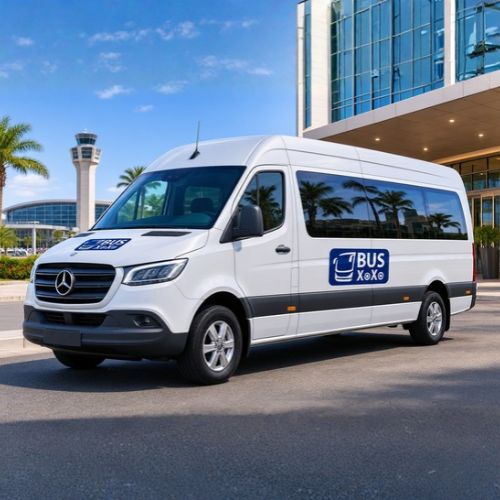
Up to 14 riders
Sprinter Van
Executive teams, airport pickups, winery days, small wedding parties.
Watch for: luggage space shrinks fast with 14 people and full-size suitcases.
Twenty people can still squeeze into a few cars. Two hundred cannot. BUSXOXO books the charter bus, minibus, shuttle, or passenger van your group actually needs, then plans the pickups so nobody is left refreshing a rideshare app at the curb.
Corporate teams, wedding guests, athletes and their parents, students, congregations, and private groups come to us for one reason: a single booking replaces a dozen moving parts. You share the headcount, the dates, and the stops. We match the vehicle, assign a licensed professional driver, and build the timetable around your event instead of a public route.
Think of this page as the planning hub. It covers every type of trip we run, how to size the vehicle, what shapes the price, what to check for safety, and how groups have solved the awkward parts, such as staggered flights and remote venues. Read it top to bottom, or grab a quote now and come back later.
The short answer
Group transportation is private, pre-scheduled ground travel for people who need to arrive together. The vehicle and driver are reserved for your group alone, so the pickup points, departure times, stops, and route all come from your itinerary rather than a public timetable.
That last detail is the whole point. A city bus serves strangers on a fixed loop. A rideshare serves one small party at a time. A charter serves your list of names from the first pickup to the last drop-off, and in most bookings the driver waits nearby while you are inside the venue, the stadium, or the museum.
It also scales in a way cars never will. The same planning logic works for a 12-person executive team in a Sprinter van and for a 300-guest wedding moving on five coaches. Only the vehicle count changes.
Four problems one booking quietly solves
Twenty-five cars need twenty-five spaces, twenty-five parking fees, and twenty-five drivers who can find the right entrance. One minibus needs one curb. Downtown hotels and stadium lots notice the difference long before you do.
When everyone drives separately, the event starts when the last car finally parks. A shared departure time creates a shared arrival time, so the group walks in together and the agenda starts on schedule.
Asking colleagues, parents, or groomsmen to drive home after a long day puts fatigued, untrained drivers on the road. A professional charter driver holds a commercial license with a passenger endorsement and works under federal hours-of-service limits.
One quote, divided by the number of riders, is far easier to approve than reimbursing gas, mileage, tolls, and parking receipt by receipt. On a full coach, the per-rider figure is often lower than people guess. See the pricing section.
Every trip type below has its own planning page. This board gives you the one lesson we see organizers learn the hard way for each, so you can walk into the quote conversation already knowing what to ask for.
Conferences, offsites, client visits, recurring employee shuttles
The drive is rarely the hard part; the hotel loop is. Stagger departures from each property every 20 to 30 minutes and hold one vehicle in reserve for the closing-night rush.
Plan it →Guest shuttles, rehearsal dinners, late-night hotel returns
Guests arrive in a trickle but leave in a wave. Plan more return capacity than arrival capacity, and run the last loop after the final song, not during it.
Plan it →Teams, tournaments, booster clubs, game-day fan groups
Gear is the hidden passenger. Bag counts, equipment cases, and coolers often decide the vehicle more than the roster does, so send the gear list with the headcount.
Plan it →Group arrivals, departures, hotel and cruise-port connections
Flights land on their own schedule. Group travelers by arrival window rather than by hotel, and send every rider the exact meeting point before they board their flight.
Plan it →Field trips, campus visits, band, debate, and robotics travel
A printed roster matters as much as the bus. Load by name, count at every stop, and keep instrument cases out of the aisle. See the school bus rental option and our field trip checklist.
Read guide →Arena shows, multi-day festivals, stadium concerts
Pickup zones shift on show night. Pick a meeting spot that still works in a crowd and agree on a departure time that is not the encore.
Plan it →Retreats, youth camps, mission trips, pilgrimages
Mixed-age groups need more stops, not more speed. Build a rest break into every two to three hours of road time and seat chaperones near the door.
Plan it →Casino day trips, bachelor and bachelorette nights, city tours
Set the return time before the first stop and save the driver's number in every phone. A party bus suits a celebration; a coach suits a three-hour drive to the tables.
Plan it →Base transfers, training moves, official delegations
Paperwork leads the trip. Manifests, gate-access lists, and arrival windows are confirmed before a vehicle is dispatched, so share them early.
Plan it →Sightseeing, national parks, family vacations, multi-day loops
Legal driving hours shape the itinerary. Map the longest leg first, then fit attractions around it, and ask whether a second driver makes a long day possible.
Plan it →Don't see your trip? If it involves more people than fit in two cars and a fixed time to be somewhere, it almost certainly belongs on this list. Tell us about it.
Picking a vehicle is mostly arithmetic, with two traps. The first is sizing to the exact headcount and forgetting the luggage, the coolers, or the wheelchair. The second is booking one giant coach for a route with a tight hotel driveway or a gravel venue lane. Use the matcher to get a starting point, then read the "watch for" note on each card before you commit.
One full-size coach with spare seats for late additions.
Up to 14 riders
Executive teams, airport pickups, winery days, small wedding parties.
Watch for: luggage space shrinks fast with 14 people and full-size suitcases.

Up to 15 seats
Short local runs, church errands, crew transfers on a budget.
Watch for: standing headroom and aisle space are limited on longer drives.
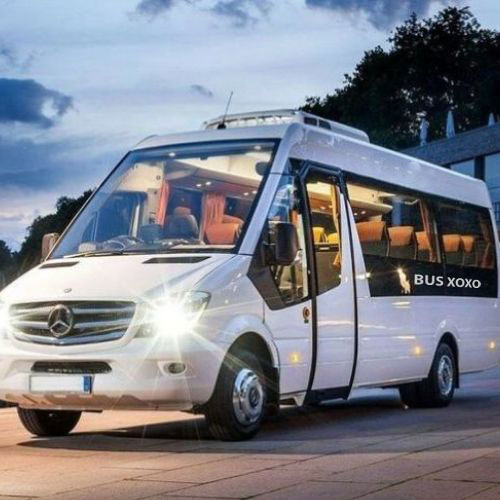
Up to 18 riders
Bridal parties, youth teams, department outings, brewery tours.
Watch for: rear luggage area varies by model, so ask before an airport run.
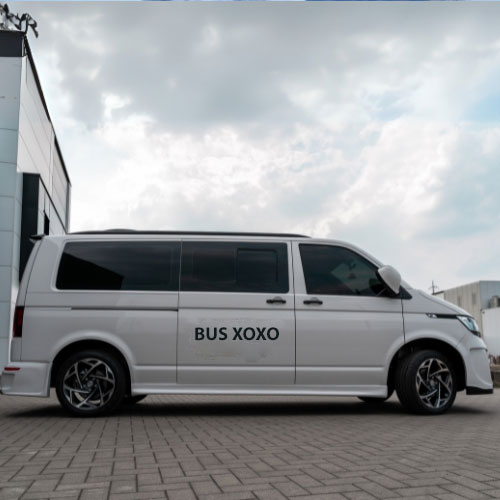
Up to 30 riders
Wedding guest loops, campus tours, mid-size corporate groups.
Watch for: fits hotel driveways and rural venues a full coach can't reach.

Mid-size, loop-friendly
Conference hotel loops, parking-lot shuttles, employee routes.
Watch for: built for short hops and fast boarding, not five-hour highway legs.

High bench capacity
Field trips, camps, short event shuttles where budget leads.
Watch for: adults fit fewer per bench, and there is usually no restroom or A/C guarantee.

Lounge seating
Bachelorette nights, birthdays, prom, city nightlife loops.
Watch for: perimeter seating is fun locally but tiring on long highway trips.

Fewer seats, more room
Client roadshows, board retreats, VIP delegations.
Watch for: premium layouts carry fewer riders, so confirm the exact seat count.

Up to 50 riders
School groups, teams with staff, company offsites, tours.
Watch for: under-floor bays handle luggage, but low bridges and tight lots need route checks.
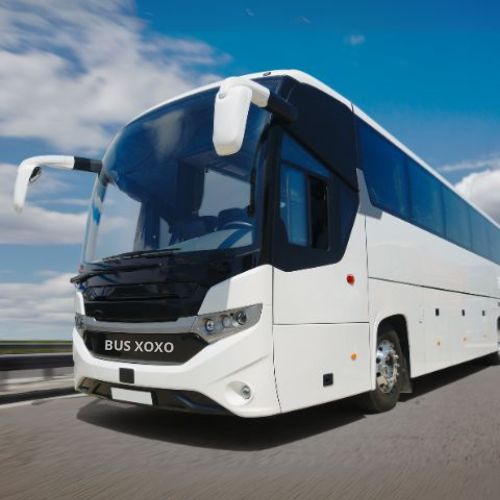
Up to 56 riders
Large weddings, conventions, band trips, cross-state tours. Also see the full-size charter bus.
Watch for: the lowest cost per rider only holds if the seats are actually filled.
Torn between sizes? Compare one charter bus vs. two minibuses, check how many seats are on a minibus, review charter bus luggage capacity, or browse the full vehicle lineup.
Amenities vary more by vehicle class than by company. A full-size coach is built for long highway legs; a minibus is built for agility. Use the key below to see what you can usually count on, what to request in writing, and what depends on the specific vehicle in your city.
Common on full-size coaches, rare on vans and most minibuses. Plan rest stops if you book smaller.
VARIESAvailable on many coaches and executive vehicles. Speeds depend on cell coverage along the route.
ASKIncreasingly standard on newer coaches. Worth confirming for work trips and long tours.
ASKTypical on motorcoaches, with armrests and footrests on many models. Minibus seating is usually fixed.
USUALAir conditioning and heat are expected in coaches and minibuses. School buses often lack A/C.
USUALEssential for guided tours and corporate briefings. Most coaches have one; ask if your guide needs it.
USUALUseful for presentations or movies on long drives. Bring content on a supported format.
VARIESCoaches carry bags under the floor. Vans and minibuses rely on rear space and overhead racks.
USUALAvailable in many markets with notice. Tell us the number of chairs and their type.
ASKParty buses and some executive vehicles trade rows for wraparound seating and mood lighting.
VARIESGood for jackets and day bags, which keeps aisles clear on school and church trips.
USUALIndividual lights are typical on coaches and handy for early starts and night returns.
USUALPut every must-have amenity in your quote request, not just in a phone call. Then review the amenities checklist, compare luxury vs. standard coaches, and see how much fits in a smaller vehicle with our note on minibus space for golf clubs. Choosing where to sit? Read window vs. aisle.
Booking group transportation should feel like handing off a job, not taking on a second one. Here is exactly who does what between your first message and the moment the doors open.
Headcount, date, rough times, and the start and end points. A range is fine at this stage.
You: fill in the quote form or call.
We: ask about luggage, stops, and accessibility.
You receive vehicle choices with clear pricing, often a one-vehicle and a two-vehicle option side by side.
You: pick the trade-off that suits the group.
We: flag driving-hour or parking issues early.
The confirmation lists times, addresses, vehicle class, inclusions, and payment and cancellation terms.
You: check every address once.
We: lock the vehicle and schedule the driver.
A week out, the final headcount and itinerary go in. Two days out, contact numbers are exchanged.
You: send the manifest and any changes.
We: brief the driver on the route and stops.
The vehicle arrives ahead of the first pickup. Your group leader and the driver run the day together.
You: count heads and enjoy the event.
We: provide 24/7 support if anything shifts.
First time organizing a trip like this? Our step-by-step guide to renting a charter bus and the advice on choosing a charter company cover the details behind each step.
Most group trips go wrong in the final week, but the cause is usually a decision skipped two months earlier. This timeline puts each decision where it belongs, so the last few days are about confirming, not scrambling.
Booking late? It is often still possible, especially for smaller vehicles. Work through the last-minute charter bus booking checklist, then call us so a dispatcher can check live availability.
3–6 months out · peak dates
On high-demand weekends, the vehicle supply runs out before the hotel rooms do. Hold the coaches as soon as the event date is fixed, even if the headcount is still a range.
4–8 weeks out
Decide the trip structure now, because it changes the price more than anything else.
2–3 weeks out
A one-page plan with times, addresses, and contacts prevents most day-of confusion.
7 days out
Headcounts drift. Lock the final number and send it in writing.
48 hours out
Swap phone numbers with the driver or dispatcher, and name one group leader who makes the call if plans change.
Trip day
Board 15 minutes early, count heads before every departure, and keep the manifest in the group leader's hand.
After the trip
Thank the driver, settle any agreed extras, and note what to change next time.
Vehicle availability follows the school year, the wedding season, and the sports calendar. The strip below is a general guide to group travel demand across the U.S. Local events shift it, so a convention or a home game can turn a quiet Tuesday into a peak date in one city.
Field trips, proms, graduations, and the first big wedding weekends all compete for the same Saturdays. Book coaches early and consider a Thursday or Sunday departure where you can.
Plan it: graduation transportation · field trip ideas
Camps, family reunions, youth tournaments, and national park tours lead. Long days on the road mean driver hours and rest stops shape the itinerary more than speed.
Plan it: cross-country trips · road trips for large groups
Football, fall weddings, conferences, and leaf-peeping tours keep fleets busy, especially on weekends. Stadium and venue pickup zones need confirming well in advance.
Plan it: fall foliage trips · concert pickup planning
December holiday parties and airport runs spike, then January and February are typically the calmest months, apart from ski trips. Ask about winter driving plans for mountain routes.
Plan it: ski resort trips · winter getaways
Weeks to watch everywhere: Memorial Day, Fourth of July, and Labor Day weekends; Thanksgiving week; the second half of December; and any weekend that combines a home football game with a large convention in the same city. If your date lands on one of these, treat it as peak even in a quiet month.
Charter pricing is built on time, not tickets. Local trips are usually billed by the hour with a minimum block; long one-way runs are often priced by the mile. The figures below are the national ranges from our charter bus rental cost guide. Your actual quote depends on the city, the date, and the route.
| Vehicle | Hourly | Minimum block | Full day (10 hrs) |
|---|---|---|---|
| Sprinter van1–14 riders | $105–$210 | 4 hrs: $420–$840 | $950–$1,800 |
| Minibus15–35 riders | $120–$250 | 5 hrs: $600–$1,250 | $1,100–$2,250 |
| Motorcoach36–56 riders | $145–$325 | 5 hrs: $725–$1,625 | $1,400–$3,000 |
Long-distance motorcoach trips typically run $6.50–$8.00 per mile, so a 250-mile one-way lands around $1,625–$2,000. Groups of 57 or more are quoted per vehicle.
6-hour motorcoach · 40 riders · national range
Sets the hourly base. A coach costs more per hour than a minibus but often less per rider once it is full: 56 riders on a 5-hour coach trip works out to roughly $13–$29 each.
The clock usually runs from pickup to final drop-off, including waiting time. Tighter itineraries cost less; long gaps in the middle may be cheaper as two separate transfers.
Peak dates such as holidays, graduations, conventions, big games, and spring Saturdays can run 10–20% higher. Thursday or Sunday travel is often 10–15% lower.
The distance from the garage to your first pickup, and back after the last drop-off, is part of the cost. Remote venues and one-way trips feel this most.
Multi-day bookings are priced per day, and the driver needs a hotel room. Very long days may require a second driver. See who pays for the driver's hotel.
Tolls, venue or airport parking fees, and fuel surcharges on long tours are typically passed through. Ask for them as separate lines so there are no surprises.
Go deeper: how charter bus pricing works · cost to rent a charter bus for a day · minibus rental cost · is a charter bus cheaper than flying? · refund policy
A charter is not always the right answer. For four people, a car is fine. For a 600-mile trip with a fixed meeting time, a flight might win. The table compares the realistic options for a group of 25 or more traveling the same route on the same day.
| What matters | Charter bus or minibus | Caravan of personal cars | Self-drive rental vans | Rideshare | Flying (300+ miles) |
|---|---|---|---|---|---|
| Group arrives together | YESOne vehicle, one arrival time | NOSpread over 30+ minutes | PARTLYVans split up in traffic | NOCar by car | PARTLYThen ground transfers |
| Who drives | PROCDL holder, passenger endorsement | YOUVolunteers | YOUStaff or parents | PROSeparate drivers | PROAirline crew |
| Parking needed | ONEA single drop-off curb | MANYOne space per car | SOMEOne per van | NONEBut surge pricing | AIRPORTPlus far-end transport |
| Luggage & gear | YESUnder-floor bays on coaches | TRUNKSUneven | LIMITEDSeats vs. cargo | TIGHTSedans fill fast | FEESBag and gear fees |
| Cost predictability | HIGHOne quote, split per rider | LOWGas, tolls, parking, wear | MEDIUMRental + fuel + insurance | LOWSurge at peak times | VARIESFares move daily |
| Time on board | USABLEWi-Fi on many coaches, meetings, rest | LOSTSomeone is driving | LOSTSomeone is driving | SHORTFine for short hops | SPLITSecurity lines, gates |
When a charter is not the right call: if your group is under eight people, if everyone is leaving from different cities on different days, or if the trip is a single short hop that rideshare covers in ten minutes, a bus may be more vehicle than you need. In those cases we would rather tell you so than sell you idle seats. The math tips toward a charter once a group shares one origin, one timetable, and more people than two cars can carry comfortably.
Carpools look free until you add gas, parking, and the risk of tired drivers after a late event. A charter also keeps the group's conversation in one place.
Read charter bus vs. carpooling, vs. van rentals, and employee shuttle vs. carpooling.
Door-to-door ground travel often matches a short flight once you add airport time, and it never strands half the group on a different connection.
Read charter bus vs. plane, train vs. bus, and the cost and comfort comparison.
Shuttles, school buses, party buses, and Sprinters each fit a job. Pick by trip length, comfort, and luggage, not just seats.
Read shuttle vs. charter, school bus vs. charter, charter vs. party bus, and charter vs. Sprinter.
Most bus companies are reputable, but "most" is not a plan when you are responsible for other people's children, employees, or wedding guests. The Federal Motor Carrier Safety Administration publishes a free Look Before You Book tool for exactly this reason. Here is the checklist we suggest every organizer run, whoever they book with.
Ask which company will actually operate your trip, then search its USDOT number in FMCSA's bus safety search. Interstate carriers should show active passenger authority.
FMCSA ratings are Satisfactory, Conditional, or Unsatisfactory. A Conditional rating deserves questions; an Unsatisfactory one should end the conversation. FMCSA explains this in its top three things to know.
Coach drivers need a commercial driver's license with a passenger endorsement. It is reasonable to ask how drivers are screened and trained.
Seat belts, working climate control, clean restrooms where promised, and a maintenance routine you can ask about. Our modern charter bus safety measures guide covers what to expect.
If a day's plan breaks federal hours-of-service rules, the fix is a second driver or an overnight stop, not a faster drive. The panel on this page shows the limits.
Times, addresses, inclusions, and cancellation terms belong in the confirmation. Review our terms and safety and trust standards.
Federal rules limit how long a passenger-carrying driver can work, which directly shapes long itineraries.
Weekly limits of 60 or 70 on-duty hours over 7 or 8 days also apply. Source: FMCSA hours-of-service summary. Planning a long day? Read when a charter bus needs two drivers.
Tell us early about riders who use wheelchairs or mobility aids so a lift-equipped vehicle can be matched; availability varies by city. The ADA.gov site explains the federal accessibility framework, and our accessible booking guide covers the practical steps.
More reading: are charter buses safe? · the safest seat · choosing the right charter company · traveling with toddlers
These are illustrative plans built from the situations organizers ask us about most, not named client stories. Each one shows the problem, the plan, and the vehicle mix, so you can borrow whatever fits your own trip.
A company retreat has guests landing between 11 a.m. and 6 p.m. One big coach would leave the early arrivals waiting for hours.
Group arrivals into three windows. A minibus runs the first two loops; a full coach collects the late-afternoon wave, which is also the largest. Every traveler gets the pickup door and a driver contact before boarding.
One 30-passenger minibus plus one 55-passenger coach.
Read: airport transfers on different flights · can a charter bus pick you up at the airport? · DFW group pickup · JFK to Manhattan
140 guests are split across two hotels 25 minutes from a rural venue. The final half-mile is too tight for a full-size coach to turn around.
Two minibuses run a continuous loop from both hotels before the ceremony, then return on a fixed late-night schedule. Return capacity is planned for 80% of guests leaving in the final hour.
Two 30-passenger minibuses, one Sprinter for the wedding party.
Read: rural venue shuttle planning · how many wedding shuttles you need · shuttle schedule template · Hill Country example
A club sends three age groups, 48 athletes and coaches, to a two-day tournament four hours away, plus parents who want to ride along.
Athletes and staff travel on one coach with gear in the under-floor bays. Parents ride a separate minibus so the team bus follows the coaches' schedule, not the hotel breakfast line. The driver stays overnight, so game-day venue hops are covered.
One 55-passenger coach plus one 30-passenger minibus.
Read: tournament transportation planning · team and parent transportation · AT&T Stadium groups · MetLife Stadium groups
800 attendees stay at four hotels. Morning sessions start together, but the evening reception releases everyone at once.
A timed loop runs from each hotel in the morning, with departures every 15 to 20 minutes during peak. In the evening, extra coaches stage near the venue door and leave as they fill.
Shuttle buses on the loops, plus coaches added for the evening surge.
Read: conference shuttle schedules · McCormick Place shuttles · Orange County Convention Center · corporate retreat checklist
The common thread: none of these plans uses one oversized vehicle to solve everything. Each splits the group by timing, terrain, or purpose, then gives every part of the group a vehicle that fits. When you request a quote, describe the awkward parts of your trip first. They decide the vehicle mix far more than the headcount does.
Every state, plus Washington, DC, has its own BUSXOXO page with local vehicle options, popular routes, and city notes. Start with the state where your trip begins; the pickup location matters more than the destination, because that is where the vehicle and driver are sourced.
Why does the starting point matter so much? A vehicle sent from a garage two hours away adds empty miles to your quote, while one based near your first pickup does not. That is why the same trip can price differently in Dallas than in Lubbock, and why a group splitting from two cities is sometimes better served by two vehicles meeting at the destination.
Crossing state lines is routine. Interstate trips simply follow federal carrier rules, which is one more reason to check the operator before you book.
States
Cities
States
Cities
States
Cities
States
Cities
Cruise port or airport run? Our transfer guides cover Orlando to Port Canaveral, Fort Lauderdale to PortMiami, Houston airports to Galveston, and Newark to Cape Liberty.
All locations →You probably did not sign up to become the transportation coordinator. These guides answer the questions that come up after the booking, sorted by who usually ends up asking them. Each one is short, practical, and written for the person holding the clipboard on trip day rather than for transportation professionals.
Guest shuttles, timelines, budgets
Offsites, conferences, employee travel
Students, teams, congregations
Comfort and on-board know-how
Straight answers to the questions organizers ask before they book. More are on our main FAQ page.
Have a question that isn't here?
Call +1 (308) 304-6668 or email booking@busxoxo.com.
Group transportation services provide a private vehicle and a professional driver for people who need to travel together. Unlike public transit, the pickup points, schedule, stops, and route are set by your group. Vehicles range from Sprinter vans for about 14 people to full-size coaches that seat up to 56.
For ordinary dates, book about four to eight weeks ahead. For peak dates, including graduations, conventions, major games, holidays, and spring or early-summer Saturdays, book three to six months ahead. Last-minute bookings are sometimes possible, especially for smaller vehicles, so it is worth calling even on short notice.
National ranges run about $105 to $210 per hour for a Sprinter van, $120 to $250 for a minibus, and $145 to $325 for a motorcoach, usually with a four- or five-hour minimum. A six-hour motorcoach trip for 40 riders typically lands between $870 and $1,950 before gratuity, or roughly $22 to $49 per person.
As a starting point, use a Sprinter for up to 14 riders, a minibus for 15 to 35, and a motorcoach for 36 to 56. Size up if you are carrying heavy luggage, sports gear, or instruments, and choose smaller vehicles if the venue has a tight driveway or a narrow access road.
Yes. Many group trips start from several hotels, offices, or neighborhoods. Each added stop adds time, so share every address when you request a quote. For large events, a timed loop between pickup points often works better than one long sweep.
On most hourly and full-day bookings, the driver and vehicle stay available for your group between legs. For simple transfers, the vehicle may drop off and return later. Tell us which you need, because the choice affects the hours billed.
Driver gratuity is usually not included. A tip of 10 to 20 percent of the charter cost is standard, and some organizers prefer to add it to the invoice so riders do not need cash.
Yes. Groups of 57 or more are spread across multiple vehicles, often a mix of coaches and minibuses. We coordinate departure times, assign a lead vehicle, and keep one point of contact for the whole fleet so the group still travels as one.
Professional charters are among the safest ways for groups to travel. Drivers need a commercial license with a passenger endorsement and must follow federal hours-of-service limits. Before booking any carrier, you can check its record with FMCSA's free Look Before You Book tool.
Lift-equipped vehicles can be arranged in many cities, but availability varies, so mention mobility needs when you request a quote. Share how many riders use wheelchairs and whether the chairs are manual or powered.
Light snacks and non-alcoholic drinks are usually fine, while alcohol policies depend on the vehicle type and local law. Coaches have under-floor luggage bays; vans and minibuses have less room, so send a luggage estimate with your headcount.
Most full-size coaches have an onboard restroom, while vans, minibuses, shuttles, and school buses usually do not. If you book a smaller vehicle for a long drive, build a rest stop into every two to three hours of the itinerary.
Yes. Airport pickups are one of the most common group bookings. Each airport has its own rules for where commercial vehicles can wait, so the driver will confirm the exact meeting point. If your group arrives on different flights, grouping travelers by arrival window keeps waiting times short.
Yes. One-way transfers suit airport runs, cruise ports, and relocations. Round trips suit events where the group returns the same day. A one-way trip can still include travel time for the empty vehicle to reach you or return, which is reflected in the quote.
Yes. Interstate and multi-day trips are routine. Multi-day charters are priced per day, the driver needs overnight lodging, and the itinerary must respect federal driving-hour limits. Very long days may need a second driver or an overnight stop.
Let us know as soon as it changes. Small headcount shifts may fit in the same vehicle, while larger ones may need a different size. Schedule changes are handled case by case, and our refund and cancellation terms explain how timing affects any charges.
You don't need a finished itinerary to start. Send us three things and a planner will come back with vehicle options and a clear price.
Helpful extras, if you have them: the number of bags or gear cases, any riders who use wheelchairs, and whether the vehicle should wait between stops. If you only know the headcount within a range, send the range; we will quote for it and adjust when the number firms up.
We reply quickly, and support is available around the clock once your trip is booked.
Email: booking@busxoxo.com
Support: support@busxoxo.com
Prefer to read first? See client testimonials or learn about BUSXOXO. Operators can partner with us.
Corporate · Weddings · Group Travel
Toll-Free · Available 24/7