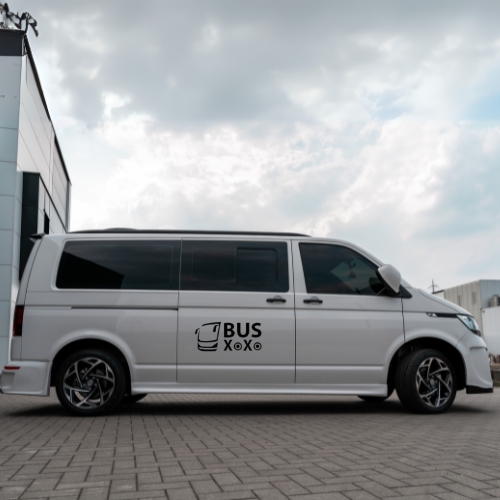
Sprinter Van
High roof, stand-up headroom and a private-car feel. Ideal for winery days, small family groups and anywhere a big coach can't turn around.
A private bus rental reserves an entire vehicle and a professional driver for one group and nobody else. Your people board at the addresses you choose, stop where you want to stop, and head home when the day is actually over, not when a timetable says it is.
BUSXOXO arranges private charters across the United States, from a 14-seat Sprinter van for a cousins' weekend to a 56-passenger motorcoach for a three-generation family reunion. We match the vehicle to your headcount and luggage, put the itinerary in writing, and stay reachable from the first pickup to the last drop-off. Browse the whole vehicle lineup or keep reading for a practical guide to renting a private bus well.
One booking, one manifest, one driver who follows the plan your group wrote.
Plain-English definition
The word gets used loosely, so here is the version we work to. When you book a private bus rental with BUSXOXO, three decisions belong to your group and nobody else: who rides, where the vehicle goes, and when it moves. Everything else on this page, from vehicle sizing to driver hours, exists to protect those three decisions.
Who rides means the passenger list is yours. No seats are sold to the public, no strangers board at a transit stop, and the person who booked controls the manifest. Where it goes means the route is drawn around your addresses, your attractions and your lunch stop rather than a published route. When it moves means departure and return times are set by your plan, inside the limits that keep the driver legal and rested.
That is the real difference between a private charter and buying seats on somebody else's tour. It is also why our team asks so many questions before quoting: we are building transport around your itinerary, not slotting you into ours.
private bus rental
noun · also called a private charter
In a sentence: "We booked a private bus rental so Grandma didn't have to drive four hours and all eleven cousins could ride together."
Every group trip lands somewhere on this line. The further right you go, the more of the day your group decides for itself.
Each car makes its own choices. The group splits at the first wrong turn, parks in several places, and someone has to stay alert for the drive home. Our comparison of a charter bus vs. carpooling shows how quickly that adds up.
Someone else picks the stops, the departure time and the pace. Your group shares the coach with strangers and boards at fixed points. Useful for two people; awkward for forty. See charter bus vs. individual bus tickets.
One vehicle, one driver, one plan. You choose the pickup points, the order of stops and the return window, and the group stays together the whole way. If plans shift mid-trip, you talk to the driver rather than a ticket desk. Start with how to rent a charter bus.
This page is for privately organized trips: families, friends, clubs, alumni groups and self-planned tours. If your plans center on a specific event, these pages go deeper on the details that matter for it.
Right-size the ride
Headcount gets you to the right shelf of the fleet. Three adjustments then decide which vehicle on that shelf is actually right for a private trip, and they are where most first-time planners get caught out.
A quick example: thirty-four people heading to the Smoky Mountains for two nights. On headcount alone, a 35-seat minibus would do. But every traveler has a suitcase, the drive is four hours each way, and the group wants to spread out. The right answer is a 50-passenger coach with luggage bays and a restroom. If you're planning that trip, our guide to Great Smoky Mountains National Park is a good companion.
For 24 passengers, a 30-passenger minibus usually fits best, with room left over for day bags.

High roof, stand-up headroom and a private-car feel. Ideal for winery days, small family groups and anywhere a big coach can't turn around.

A straightforward choice for short local runs where the group needs seats more than amenities. Luggage space is limited once every seat is full.
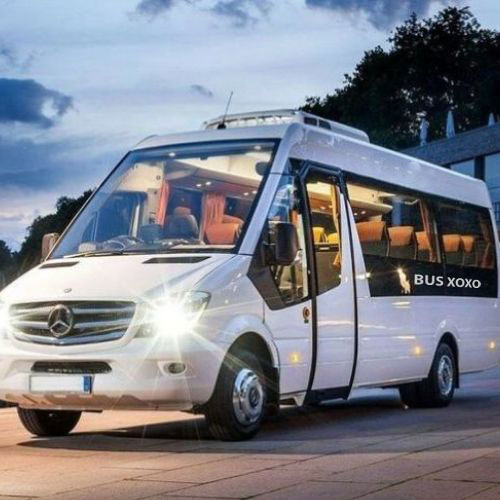
A real bus aisle and forward-facing seats in a compact body. A favorite for book clubs, small reunions and friend groups who want to sit together.
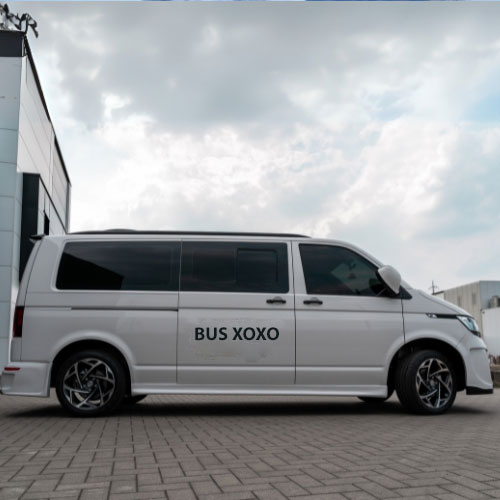
The mid-size workhorse. Nimble enough for scenic byways and tight hotel loops, roomy enough for a full club outing. Compare all minibus rentals.
Reclining seats, overhead racks, under-floor bays and, on most coaches, a restroom. The standard for long day trips and multi-day private tours.
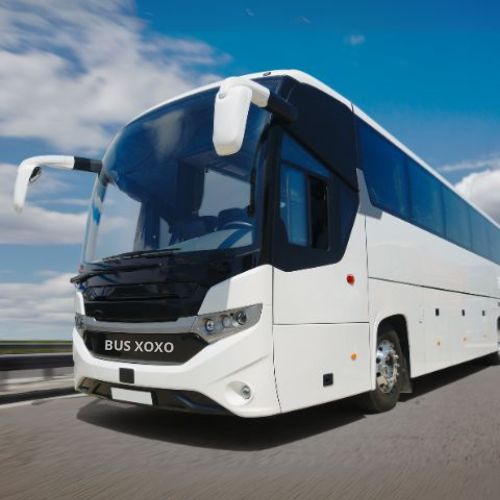
The largest single vehicle most groups book. One coach, one manifest, one arrival. See the full-size charter bus page for layouts.

When legroom matters more than seat count: milestone celebrations, VIP family trips, long touring days. The luxury vs. standard coach guide explains the trade-offs.

Large reunions and multi-family vacations often run a coach plus a minibus. Read one charter bus or two minibuses before you decide.
Also in the fleet: a party bus when the ride itself is the celebration (best for shorter local hops), a shuttle bus for repeated loops between hotels and a venue, and a school bus for youth groups on short trips. Seat counts vary by operator and model, so we confirm the exact layout on your quote. Still unsure? What size charter bus do I need? walks through it.
Six trips we plan again and again
Every private charter starts with a group and a reason. These six are the ones we arrange most often. Each card covers who usually books it, the snag a private bus quietly solves, and the vehicle that tends to fit.
Grandparents in one suburb, cousins spread across three hotels, and a lake house two hours away at the end of a gravel lane. A private bus collects everyone in order, loads the coolers underneath, and finally puts the oldest and youngest in the same row.
The snag nobody plans for: the venue entrance. Low branches, soft shoulders and tight gates stop full-size coaches. Send us the address early and we'll check it.
Twelve friends, a fortieth birthday and a list of wineries. The van waits outside each stop while you're inside, so the afternoon runs at the group's pace instead of a rideshare app's. Nobody draws the short straw for the drive home.
The snag: many tasting rooms cap group sizes and ask for reservations. Book the tastings first, then lock the vehicle around those times.
A week through Yellowstone and the Tetons, or a southwest loop from Zion to Bryce Canyon to the Grand Canyon, works best when the same coach and driver travel with you. Bags stay on board, the driver rests near your hotel, and each day's mileage is planned around federal driving limits.
The snag: parks set their own rules for commercial vehicles and busy viewpoints. Check each park on the National Park Service site while you sketch the route.
A class reunion that moves from a campus tour to a tailgate to dinner downtown. A garden society heading to a flower show two states away. A car club bound for an expo. A private bus keeps the roster together and on time without anyone herding a convoy.
The snag: when two organizations share one bus, decide who signs the agreement and who handles changes before you book.
Vermont's back roads, the Blue Ridge Parkway and the Hudson Valley are lovely precisely because they're narrow, winding and busy in October. A professional driver handles the curves while everyone else watches the hills go orange through big windows.
The snag: some scenic routes and pull-offs suit a minibus better than a full coach. Tell us the roads you want and we'll size the vehicle to them.
For thirty people, a city-to-city hop is often simpler by private bus than by plane or train. Everyone boards at your own front door, bags go underneath once, and lunch happens wherever you decide. Turn it into a loop and the same coach carries you to a second city before home.
The snag: big-city curbs. Hotels and attractions often have strict coach loading zones, so we confirm them ahead of time.
Other private trips we arrange regularly: holiday travel with extended family (holiday charter tips), cruise-day transfers for big groups (cruise pickup planning), graduation celebrations (graduation transport) and long, multi-state journeys (cross-country charters). For Texas-based groups, our Texas road trips for large groups list is a good place to start.
What actually happens on the day
Quotes and contracts are abstract. This is what a typical private charter day looks like once the wheels turn, using an illustrative family reunion with three pickups and a lake park two hours away. Your times will differ, but the rhythm is almost always the same.
Before anyone boards, the driver walks around the vehicle checking tires, lights, brakes and emergency exits, then loads your itinerary and contact sheet.
The driver helps with a walker and a folding chair, stows bags in the luggage bay, and seats the slowest walkers nearest the door.
Because we confirmed the hotel's bus loading area ahead of time, the coach pulls straight in instead of circling the block.
The group leader reads the manifest aloud. Forty-two names, forty-two answers. Nobody gets left in a lobby.
Fifteen minutes at a travel plaza for coffee and stretching, even though the coach has a restroom. Kids and grandparents both appreciate it.
The driver parks in the designated bus lot. Once released from duty for the afternoon, that rest time doesn't count toward the driver's on-duty limit.
The leader asks; the driver checks the route and the clock, confirms with dispatch, and says yes. Small detours are exactly what a private bus is for.
A short hop to a restaurant with a private room. The coach waits in the back lot while three generations argue about dessert.
Hotel B, Hotel A, then the grandparents' driveway, the same order in reverse so nobody rides an extra loop.
The driver walks the aisle for phones, jackets and one inevitable stuffed rabbit, then reports the trip complete.
Illustrative example only. Real schedules depend on distance, traffic, stops and federal hours-of-service limits for the driver.
How booking works
You can't book a private charter the way you buy a concert ticket, because no two trips share the same addresses, stops, luggage or timing. What you can do is have one well-organized conversation. On the right is how a typical one goes; below is the path it follows.
The rule behind every long day
Most surprises on long private trips trace back to one thing planners rarely hear about: federal limits on how long a bus driver may drive and work. They exist to keep drivers alert and passengers safe, and a good charter company plans around them at the quote stage so your group never meets them on the road.
A passenger-carrying driver may drive up to 10 hours after 8 consecutive hours off duty.
No driving after 15 hours on duty following that 8-hour break. Genuine off-duty time isn't counted in the 15.
Consecutive off-duty hours the driver needs before the driving clock resets for a new day.
On-duty hours are also capped across 7 or 8 consecutive days, which matters on week-long tours.
Source: FMCSA summary of hours-of-service regulations for passenger-carrying drivers. The full rules include exceptions, such as limited extensions for adverse driving conditions.
A day with plenty of waiting, like a lake visit or a wedding, often fits because time the driver is properly released counts as off duty. The key word is released: on call in the driver's seat is still on duty.
On multi-day trips the driver rests near your hotel and the coach stays with the group. Lodging for the driver is arranged in advance. Read who arranges the driver's hotel and does the bus stay with your group.
When a single day's driving would exceed the limits, the answer is a second driver or an overnight split. Here's when a charter bus needs two drivers.
Sketch each day's mileage before you finalize stops. Our multi-day itinerary guide and itinerary template make it quick, especially for cross-country trips.
Onboard comfort
Amenity lists on bus websites tend to promise everything on every vehicle. Real fleets don't work that way. A Sprinter van and a 56-seat motorcoach are built for different jobs, and features vary by operator and model year.
So here is the honest version, sorted into three shelves: what you can usually count on, what you should ask for by name, and what depends entirely on the size of the vehicle you choose. Whatever matters to your group goes on the quote in writing.
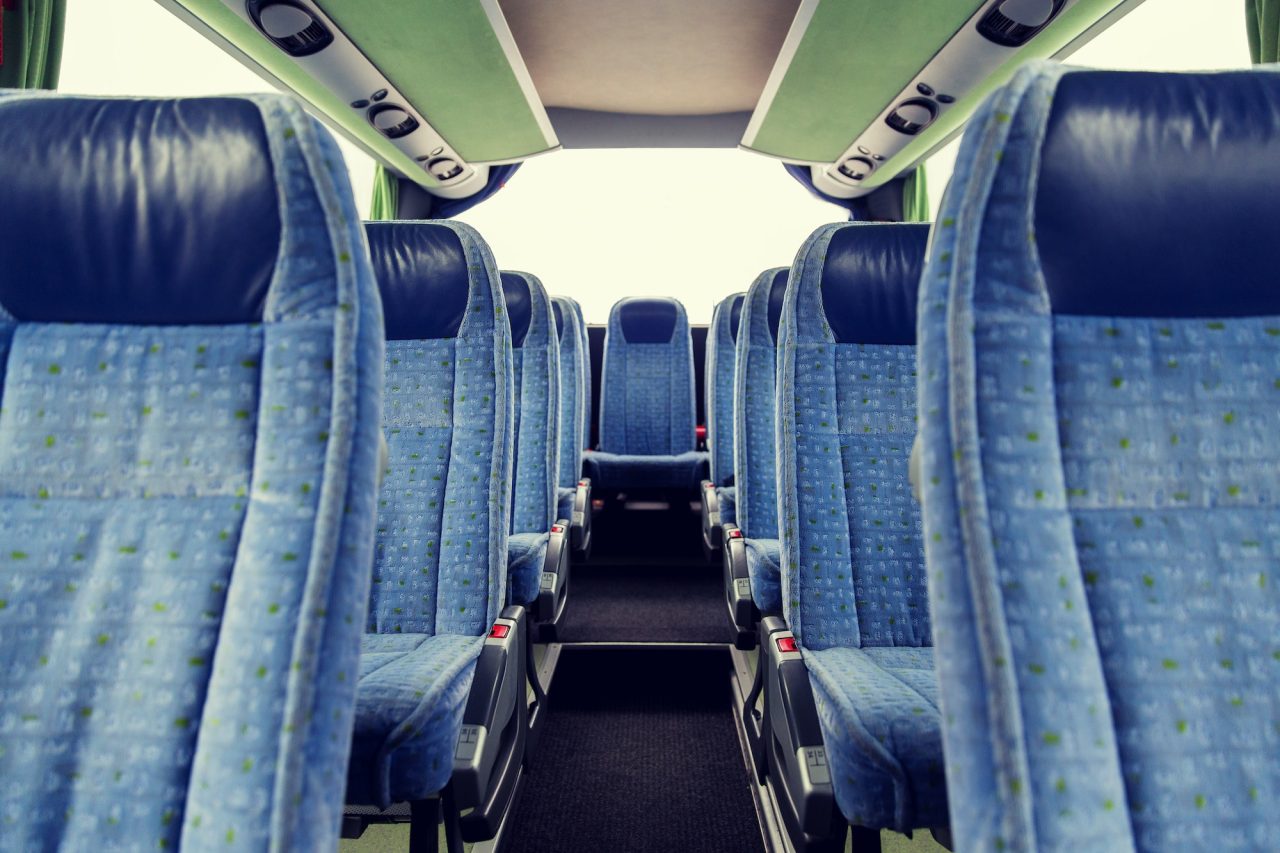
A tip from experience: if a particular feature is the reason you're choosing a vehicle, such as a restroom for a group with older travelers, outlets for a working trip, or under-floor space for camping gear, say so when you ask for a quote and make sure it appears on the confirmation. "Usually has" and "confirmed for your trip" are not the same thing, and the time to close that gap is before the bus arrives. For a full rundown of features and the questions to ask, use our charter bus amenities checklist. Prone to motion sickness? These motion sickness tips and our note on the window vs. aisle seat help.
Trust, but verify
Here's a habit every group planner should have: before you sign anything, look up the company that will actually operate your vehicle. It takes about five minutes, it's free, and the federal government built the tools specifically for people booking group travel.
The Federal Motor Carrier Safety Administration runs a program called Look Before You Book. Search a company by name or USDOT number and you'll see whether it's authorized to carry passengers, its safety rating, and any flagged problem areas. FMCSA also publishes a short bus safety checklist and a list of the top things to know before a bus trip.
We'd rather you check than take our word for it. Ask us for the operating carrier's name and USDOT number for your trip, then run the search yourself. More on our standards on the Safety & Trust page.
Illustration of the fields to look for, not a real search result.
The company that answers your call isn't always the company that drives the bus. Ask who the operating carrier is and for its USDOT number. Our guide to a charter broker vs. operating carrier explains why it matters.
For interstate trips, the record should show the carrier is authorized to carry passengers. FMCSA says a company placed out of service, or without operating authority, shouldn't be booking trips across state lines.
Ratings run Satisfactory, Conditional or Unsatisfactory; some carriers are simply not yet rated. Look at flagged categories too. Unsatisfactory or out of service means don't book.
A charter driver should hold a commercial driver's license with a passenger endorsement. On long trips, ask how the company handles a backup or second driver.
Carriers operating buses designed for 16 or more passengers must carry federally required minimum coverage. Asking for proof is a normal request.
Further reading: Are charter buses safe? · Choosing the right charter company · Modern bus safety features · The safest seat on a bus
Assumptions, corrected
Most of what first-time planners believe about private charters comes from school buses, airport shuttles or a tour they once took. Some of it is close to true. Some of it costs groups time, comfort or a smooth departure.
Some of the most popular private trips are for ten to fourteen people in a Sprinter van. Small groups get the same benefits: one pickup plan, no parking hunt, nobody stuck driving. The charter bus vs. Sprinter van guide helps you choose.
That's a scheduled coach or a public tour. A private charter is drawn around your addresses and stops. Practical limits remain, such as roads unsuitable for large vehicles and driver hours, and we tell you about them before you book.
Seat count is a hard limit. On a charter, every passenger needs a seat of their own, and standing in the aisle isn't an option. If your list grows, tell us early so we can size up or add a vehicle. Read changing your passenger count.
A 45-foot coach needs legal places to load and park, and many downtown streets, hotels and venues restrict where buses can stop or idle. We plan those spots ahead. Our parking guidelines explain what to check.
Authority, safety ratings and insurance are public record and worth checking, especially for interstate trips. It takes five minutes. Jump back to how to verify a carrier for the exact steps.
Coordinating eight cars means eight drivers, eight parking spots and eight arrival times. A private bus is one conversation and one confirmation. If you're starting late, our last-minute booking checklist keeps it simple.
Some of our favorite private charters run a week or more: national park loops, multi-city family vacations, regional food tours. The same vehicle and driver stay with you, and luggage stays on board. The multi-day planning guide shows how to pace it.
Not on a winding mountain road, a tight downtown block or a farm lane. A minibus that reaches the front door often beats a coach that has to stop a quarter-mile away. Compare the two in minibus vs. coach bus.
Many drivers know their regions well and are happy to share a tip, but their job is driving safely. If you want narration, bring or book a local guide; most coaches have a PA microphone they can use. Our destination guides help you script your own.
Coverage
BUSXOXO arranges private charters nationwide, from big-city pickups to small-town driveways. Trips can start and finish in the same place, run one way, or cross several state lines; each choice changes how the vehicle and driver are scheduled, which our guide to round-trip vs. one-way charters explains.
Our state and city pages cover local details we can't fit here: popular destinations, venues with tricky coach access and nearby day-trip ideas. Starting at an airport or a cruise terminal? The airport charter page handles flight-day logistics, and our note on groups arriving on different flights is worth reading first.
Further reading
Grouped by where you are in the planning process, so you can read what's useful now and save the rest for later.
Start here if you're still deciding between vehicle types or wondering whether a bus beats the alternatives for your group.
Once the bus is booked, these cover the details that make departure day calm: timing, boarding, changes and templates.
Share these with the group a few days before you travel, so everyone knows what to expect once they're on board.
Browse more by topic: Group transportation guides · Charter bus tips · Bus tours & road trips · Destination guides · All articles
Questions, answered
The questions we hear most from families, friend groups, clubs and anyone planning a private charter for the first time.
It's the exclusive hire of a bus, minibus or van together with a professional driver for one group only. Your group decides who rides, where the vehicle picks up and stops, and when it departs and returns, within the safety limits that apply to commercial drivers. No seats are sold to the public.
Yes. Every private charter we arrange comes with a licensed professional driver. You don't drive the vehicle yourself, which is exactly why it works so well for groups: everyone, including the person who organized the trip, gets to be a passenger.
As a starting point, Sprinter vans suit groups of up to about 14, minibuses cover roughly 18 to 35, and full-size coaches carry around 50 to 56. Luggage, trip length and comfort can push you a size up. Groups above 56 usually split across two vehicles. We confirm exact seat counts on the quote.
As early as your plans allow. Spring, fall foliage season, graduation weeks and holiday weekends are busy for motorcoaches, so popular dates fill up first. Shorter-notice requests are sometimes possible, especially midweek, and it's always worth asking.
Yes. Multiple pickup points and planned stops are among the main reasons groups choose a private bus. Share every address and stop in order when you request a quote, so the timing is realistic and each location can be checked for coach access.
Small changes, such as a short detour or a slightly different stop, can often be handled on the day if they fit within the reserved time and the driver's hours. The group leader should ask the driver, who confirms with dispatch. Bigger changes are much easier to arrange before the trip.
Under FMCSA rules for passenger-carrying drivers, a driver may drive up to 10 hours after 8 consecutive hours off duty and may not drive after 15 hours on duty. Weekly limits also apply. Very long days are planned with an overnight stop or a second driver.
Yes. Short local trips, such as a dinner outing, a stadium run or an afternoon of sightseeing, are common. Minimum rental times vary by operator, vehicle and market, so the quote states the exact block of time reserved for your group.
Both are routine. One-way trips work well for relocations, city-to-city getaways and trips that end at an airport. Interstate trips must be run by a carrier with federal operating authority for passengers, which is one more reason to check the operating carrier's record before you travel.
The driver will usually wait a reasonable time, but every minute at one stop pushes back the rest of the schedule and the driver's working day. Set a boarding time a little ahead of the real departure, keep a phone number for every passenger, and let the driver know quickly if someone is running behind.
On most multi-day private tours, yes. The same vehicle and driver travel with your group, your luggage can stay on board between stops, and the driver rests overnight near your hotel. The exact arrangement is written into your itinerary before you travel.
The driver needs a proper room for the legally required rest period, usually at or near your group's hotel. Lodging for the driver is arranged in advance as part of the trip plan, and the quote spells out how it's handled.
Snacks and non-alcoholic drinks are usually welcome, with care for the interior. Alcohol rules vary by operator, vehicle type and state law; some private bookings allow adults 21 and over to bring their own drinks, others don't allow it at all. Ask at the quote stage and get the answer in writing.
Full-size coaches have under-floor bays that comfortably handle a suitcase per person on most trips. Vans and minibuses have much less space once every seat is filled. Tell us about coolers, sports gear, instruments or strollers so we can size the vehicle correctly.
Lift-equipped vehicles can be arranged in many areas, but supply is limited. Charter operators may require at least 48 hours' advance notice under DOT accessibility rules, so mention any mobility needs when you first request a quote.
Tipping is customary for good service on private charters, but it's your decision. Some groups collect it on the last day; others arrange it in advance. Agree on the approach before the trip so nobody is caught off guard.
Still have a question? Visit our general FAQ, read what other groups say on our testimonials page, or contact our team.
Ready when your group is
Tell us who's coming, where everyone needs to be picked up and what the day or week looks like. We'll match the right vehicle and a professional driver to that plan and send it back in writing, so you can share it with the group and stop worrying about the logistics.
New to BUSXOXO? Read what other groups say or learn more about us.
Prefer email? booking@busxoxo.com
Corporate · Weddings · Group Travel
Toll-Free · Available 24/7