
 Up to 14 seats
Sprinter Van
Best for: pastoral staff, worship teams, small mission teams heading to the airport, visiting speakers.
Watch for: limited luggage space once every seat is full; plan for carry-ons only on longer trips.
Sprinter or bus?Church & Religious Group Transportation
From the youth retreat that leaves the parking lot at 6 a.m. to the senior choir heading to a Christmas concert two states away, BUSXOXO arranges church bus rental with a professional driver, a vehicle sized to your headcount, and a plan your volunteers can actually follow.
We work with congregations, parishes, synagogues, mosques, temples and faith-based nonprofits across the United States. You tell us the people, the places and the times; we match the right charter vehicle and handle the logistics so your leaders can stay focused on the people in the seats.

Why churches charter instead of carpooling
Picture the Friday before a youth retreat. The coordinator is chasing three missing permission slips, a parent has just texted that her son gets carsick, the worship leader wants to know whether the keyboard fits under the bus, and somebody on the finance committee is asking how many mini-vans the church can borrow. None of that is unusual. It is simply what church travel looks like when the people organizing it are pastors, staff and volunteers who already have a full week.
A church charter bus removes most of those moving parts in one decision. Instead of five private cars leaving at five different times, everyone boards together, the headcount happens once on the curb, and a commercially licensed driver takes the wheel. Volunteers who would have spent four hours on the interstate get to do what they signed up for: lead the small group, run the devotion, sit with the nervous first-timer.
That is why we build every church group transportation plan around the ministry first and the vehicle second. A men's breakfast across town, a mission team flying out of a regional airport, a Lenten choir tour of five parishes and a Sunday overflow shuttle for Easter all need different things. Some need a nimble Sprinter van; some need a 56-seat coach with a restroom and room for luggage for a week; some need a bus that comes back every 15 minutes for three hours. Our job is to ask the right questions early so the answer fits.
It also changes the conversation with your board and insurer. When a church uses its own van or relies on volunteer drivers, the liability, the maintenance and the fatigue all sit with the congregation. With a charter, you are hiring an operator whose drivers, vehicles and insurance are regulated at the federal level. We walk through exactly what to verify in the safety section below, and you can compare both options in our guide to church van vs charter bus.
If you are planning for the first time, start with our church retreat transportation checklist, then come back to the seat planner on this page. If you have done this before, skip ahead to the trip types or the booking steps. Either way, the quote is free and comes with a human who has moved church groups before.
Trips we plan, season by season
Church travel follows a rhythm. Demand for buses spikes around the same weekends every year, so knowing which season your trip falls in tells you how early to book and what kind of vehicle tends to work. Here is how the year usually looks from our side of the reservation desk.
Mountain camps mean snow, chains and luggage bays full of sleeping bags. We favor full-size coaches with deep under-floor storage and drivers comfortable on grades. See our note on charter bus luggage capacity.
Statewide assemblies and annual meetings often need a coach for delegates plus a local shuttle between the hotel block and the convention hall.
Multi-stop days visiting sister churches. Build in setup time at each sanctuary; a mid-size bus handles tight church lots better than a 56-seater.
When attendance doubles, a looping shuttle bus from a school or office lot keeps the sanctuary full and the neighbors calm.
Family-heavy groups with grandparents and young kids. Low-step entries and an onboard restroom matter more than Wi-Fi.
Week-long service projects with tools, paint and donated supplies. Ask about driver lodging and daily work-site runs before you sign.
The busiest stretch of the year. Popular camp weeks book out first, so lock in vehicles as soon as your registration numbers settle.
Short local hops with lots of children. A school bus rental is often the practical, familiar choice for families.
Multi-day routes to shrines, museums and historic churches. See the destinations section for planning notes by region.
Visiting congregations arriving from several towns. One bus with multiple pickup locations beats a caravan.
Fall foliage drives, lunch outings and holiday light tours. Comfort, step height and frequent stops lead the plan.
December weekends fill fast. Read our holiday charter guide and request your date early.
Religious group travel, all traditions
"Church bus rental" is how most people search, but the groups we move are wonderfully varied. What they share is a need for transportation that respects the purpose of the trip. Here are some of the communities that book religious group charter buses with us.
Tell us about prayer times, Sabbath or holy-day travel limits, fasting periods or anything else that affects when the group can move. We build departure and return times around them rather than asking you to fit our clock. If a rest stop needs space for prayer, we plan for it.
Some groups want worship music on the speakers the whole way; others want quiet for reflection. Seating arrangements, food on board and use of the PA system are your call. Share expectations in the trip notes and we pass them to the driver before day one.
Interfaith service days, community choirs and joint youth events often involve two or three organizations splitting one vehicle. We can set that up cleanly; read how to share one charter bus booking between organizations.
Not sure your event counts as "religious group travel"? If people from your community are going somewhere together, it does. Ask us.
Church bus options by group size
Seat count is only half the decision. A 40-person youth group with a week of luggage needs a different vehicle than 40 seniors going to lunch. Each card below tells you who the vehicle suits in church settings and what to watch for. Capacities vary slightly by operator and model, so we confirm the exact layout on your quote.
Up to 14 seatsBest for: pastoral staff, worship teams, small mission teams heading to the airport, visiting speakers.
Watch for: limited luggage space once every seat is full; plan for carry-ons only on longer trips.
Sprinter or bus? 15 seats
Best for: small-group outings, Bible study day trips and deacon visits where you still want a professional driver.
Watch for: this is the class many churches own; booking it with a driver shifts the driving burden off volunteers.
Van vs charter bus 18 seats
Best for: senior ministry lunches, choir sections, elder boards and confirmation classes.
Watch for: standing headroom and an easier step make this kinder to older riders than a van.
Minibus seating explained Up to 30 seats
Best for: mid-size youth groups, VBS volunteer teams and parish tours with tight church parking lots.
Watch for: rear luggage space is modest; overnight trips with sleeping bags usually need the next size up.
All minibus sizes Loop service
Best for: Easter and Christmas overflow lots, multi-campus Sundays and conference hotel loops.
Watch for: built for frequent short boarding, not long highway days with luggage.
Shuttle vs charter Kids & local trips
Best for: VBS field days, children's ministry outings and local service projects.
Watch for: no restroom, bench seats and little storage; keep it to short, local runs.
School bus vs coach Up to 50 seats
Best for: regional conferences, revival delegations and two-day retreats.
Watch for: leave a few seats empty for chaperones and a spread-out group on long legs.
Sizing guide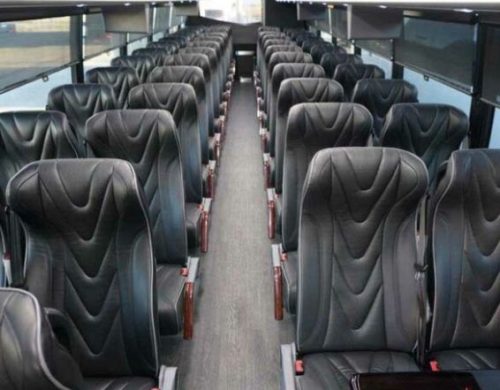 55–56 seats
Best for: summer camp, multi-state pilgrimages and mission trips with a full week of gear.
Watch for: confirm the bus can enter and turn at camp and retreat-center roads before booking.
Full-size coach details Lounge layout
Best for: pastors' and elders' retreats, guest-speaker transfers and diocesan leadership days.
Watch for: fewer seats by design; pick it for the meeting space, not the headcount.
Executive vs standard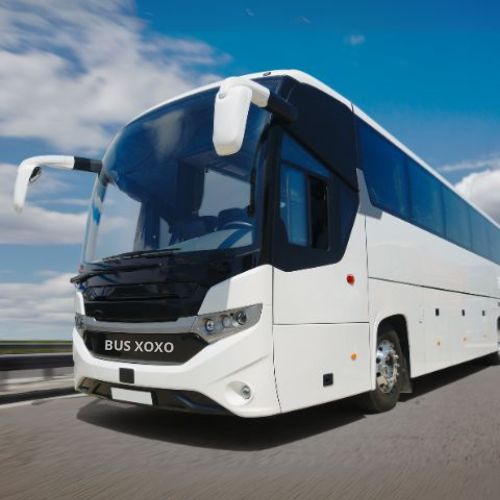 100+ riders
Best for: whole-congregation outings, diocesan youth days and convention delegations.
Watch for: assign a captain and a manifest to each bus; sometimes two minibuses beat one coach.
One bus or two?Still deciding? Our overview of types of charter buses and the comparison of minibus vs coach bus cover the trade-offs in more depth, or try the seat planner just below.
Free planning tool
Enter your numbers and this planner suggests a starting vehicle, flags anything that changes the answer, and gives you a sensible chaperone count to discuss with your leadership team. It runs entirely in your browser and nothing is sent until you choose to request a quote.
The logic follows what we see on real church trips: people spread out on long drives, sleeping bags eat luggage space, and restrooms only come standard on full-size coaches. For the full reasoning, read what size charter bus do I need.
Your church's own child-safety policy always overrides the chaperone suggestion here.
An honest comparison
Plenty of congregations own a van, and for short local errands it can work well. The picture shifts on longer trips, with youth on board or when volunteers are asked to drive after a full day of camp. Church insurers such as Brotherhood Mutual and denominational offices like the United Methodist GCFA publish specific guidance on 15-passenger van use for exactly this reason.
Short, local runs with adults, an experienced driver who is fresh, and a vehicle that is current on maintenance. Delivering meals, a pastoral visit, a trip to the hardware store before a work day. We would rather tell you that than sell you a bus you do not need.
Anything overnight, anything with minors and a long highway leg, anything needing more than two vehicles, and any trip where your volunteers would be driving tired. Our full write-up on church van vs charter bus and the broader charter bus vs carpooling guide cover the details.
From committee meeting to curbside
Most transportation problems on church trips are really timing problems: the bus was booked after registration closed, the headcount changed and nobody told the operator, or the retreat center's road turned out to be too narrow. This countdown spreads the decisions out so none of them land on the last week.
Short on time? Our last-minute booking checklist covers trips inside two weeks.
For summer camp, Easter and December concerts, request a quote as soon as the trip is on the church calendar. Peak weekends go first.
A quote is not a booking. Read the terms, check who is authorized to sign for the church, and lock the vehicle in.
Write down every pickup, rest stop, meal and return time. For overnight trips, include where the driver will stay and any daily runs at the destination.
Send the final passenger count and any changes. Build a manifest with emergency contacts and medical notes for each rider, kept by the trip lead, not the driver.
Send parents the departure time, return window, packing list and the trip lead's phone number. Assign bus captains and seat chaperones.
Headcount at boarding, at every stop and before the bus leaves any venue. Keep the manifest on paper as well as on a phone. Before you say goodbye, sweep the seats for phones, Bibles and water bottles.
Mission & service trips
Mission trips are the most logistically demanding church travel we arrange. A team of twenty might fly, drive, sleep in a church fellowship hall and work at three different sites in a week, all while hauling tools and donated supplies. Breaking the transportation into legs keeps it manageable.
Early-morning departures are the norm. Book a vehicle with enough luggage room for checked bags, carry-ons and team supply bins, and schedule pickup with a generous buffer for group check-in.
Our airport charter bus team handles terminal drop-off rules, and our guide explains how airport pickups work for charter buses.
Teams rarely land together. When members connect from different cities, plan one pickup window rather than a bus waiting all afternoon, or split the group across two smaller vehicles.
Read our advice on group airport transfers with different flights before you finalize arrival times.
For domestic service projects, the bus can stay with you for the week, shuttling between lodging, the work site, meals and evening worship. Build driver rest into the daily schedule and confirm the driver's lodging near your base.
Long days may need relief; see when a charter bus needs two drivers and driver lodging on overnight trips.
These details change which vehicle fits a mission team and are much easier to plan around early than to fix on the curb.
Safety for congregations and youth groups
Parents trust the church, and the church is trusting us. Safety on a church trip has two halves: the operator has to meet federal standards, and the group has to have its own plan for the people on board. Here is what we handle, what you should verify for yourself, and what stays with your leaders.
Maximum driving time for a passenger-carrying driver after 8 consecutive hours off duty, per the FMCSA hours-of-service summary.
The on-duty limit. Waiting at the retreat center counts, which is why long days often need a second driver or an overnight.
Minimum insurance for interstate companies operating buses designed for 16 or more passengers, per the FMCSA bus safety checklist.
For youth groups specifically, FMCSA's Look Before You Book resources are worth sharing with your parents' committee. Our own article on modern charter bus safety features covers what is built into today's coaches.
Onboard amenities, seen through a ministry lens
On a four-hour ride to camp, the bus is the first session of the retreat. Leaders who plan for that get more out of it. Here is how the space inside a typical full-size church charter bus can work for your group. Exact amenities vary by vehicle, and we confirm them on your quote.
Illustrative layout of a full-size coach. Not to scale; layouts differ by model.
Prayer before departure, the day's schedule, a short devotion. Ask the driver to show the trip lead how the microphone works at boarding.
Worship playlists, a faith-based film on the ride home, or the conference recap video. Bring media on a USB drive or phone and test it at the first stop.
Phones stay charged for photos and check-ins. Many coaches offer Wi-Fi; see what to expect in our charter bus Wi-Fi guide.
Leaders spread through the cabin and near the rear. Keep a bag of games and conversation cards here; try our list of games to play on a charter bus.
Fewer stops, happier seniors and young children. Here is what to know about which charter buses have bathrooms.
Sound equipment, VBS decorations, mission-trip tools and choir risers. Keep guitars in hard cases; read our tips on carrying instruments on a charter bus.
Packing snacks for the youth group? Check food and drink rules on a charter bus. Riders who get queasy will thank you for sharing how to stop motion sickness on a bus, and the overnight crowd can read how to sleep on a bus. Our full amenities checklist helps you ask for exactly what you need.
Nobody left at the curb
A congregation is every age at once. The same Sunday school class might include a toddler, a teenager on crutches and a grandmother who uses a walker. Planning the trip around the least mobile rider is how you make sure the whole church can go.
If anyone in your group uses a wheelchair or mobility scooter, tell us when you request a quote, not the week of the trip. Lift-equipped coaches exist but are a smaller share of most fleets, and operators of over-the-road buses generally ask for advance notice to have one ready. FMCSA explains passenger rights and how to raise concerns on its bus accessibility page, and our step-by-step guide covers how to book a wheelchair-accessible charter bus.
For children's ministry and family events, read our advice on charter bus travel with toddlers, including car seats and nap-friendly scheduling.
Ask early, share chair dimensions and whether the rider can transfer to a seat.
Minibuses and some coaches have kneeling or lower entries that suit walker users.
Fewer stops and less walking, which matters on any trip with older members.
Extra boarding time and stops every 90 to 120 minutes for stretching and medication.
Faith destinations we plan for
These are some of the places church groups ask us about most. For each, we have noted one practical thing that tends to shape the bus plan. Always confirm current hours, group ticketing and coach parking directly with the venue before you finalize the itinerary.
A popular two-day combination for youth and family ministries. The Ark Encounter in Williamstown and the Creation Museum near the Cincinnati airport are roughly an hour apart.
Plan note: stay between the two and keep the bus with you for both days. See Kentucky charter bus.
The Museum of the Bible near the National Mall and the Basilica of the National Shrine in Northeast DC often share one itinerary with monuments.
Plan note: curbside time downtown is tight; agree on exact drop and pickup points. See DC charter bus.
Biblical stage productions in Lancaster, PA and Branson, MO draw choir and senior groups year-round. Sight & Sound sells group tickets in advance.
Plan note: build the bus schedule around the show time, not the reverse. See Pennsylvania and Branson.
The Billy Graham Library in Charlotte pairs well with the conference and camp centers of the western North Carolina mountains.
Plan note: winding mountain roads may favor a mid-size bus. See North Carolina charter bus.
Ebenezer Baptist Church at the Martin Luther King Jr. National Historical Park in Atlanta, then Birmingham's 16th Street Baptist Church and Montgomery.
Plan note: a three-city loop fits a long weekend. Read Birmingham civil rights sites and see Atlanta charter bus.
Four Spanish colonial missions south of downtown remain active parishes, linked to the River Walk by the Mission Reach trail.
Plan note: respect Mass times on weekends and visit between services. See San Antonio charter bus.
A remarkable stone-and-gem shrine in West Bend, a favorite for Catholic parish day trips across the upper Midwest.
Plan note: rural roads and small-town dining; pre-order lunch for the group. Read our Grotto travel guide.
Large Baptist and non-denominational youth camps in Oklahoma and arena conferences in cities like Atlanta, Dallas and Orlando fill coaches every summer.
Plan note: camp weeks book out early. See Oklahoma charter bus.
Beyond the one-off trip
Some of the most valuable church transportation never leaves town. A weekly shuttle can bring back members who stopped attending when they gave up driving. An Easter overflow loop can free up hundreds of parking spaces. Here are the three recurring models we set up most often.
A fixed weekly run through senior apartments, assisted-living communities and neighborhoods with members who no longer drive, arriving before the first hymn.
For Easter, Christmas Eve, revivals and large funerals. A shuttle bus cycles between a borrowed school or office lot and the church door every few minutes.
Churches with satellite campuses use shuttles for combined services, youth nights and staff meetings, and to move worship teams between venues on a tight Sunday.
Check that your church lot can take a full-size coach in and out without reversing onto the street. Our parking guidelines and bus parking checklist explain what drivers need, and our comparison of shuttle bus vs motorcoach helps you pick the right vehicle for loops.
Reserving your church bus
No sales scripts and no pressure. You get a written quote for your exact trip, with time to take it to your committee. If you have never chartered before, our walkthrough on how to rent a charter bus covers the basics.
Use the online quote form or call. A rough headcount is fine to start.
We suggest vehicle sizes and flag access, timing or driver-hour issues on your route.
Share the written quote with your pastor, board or finance committee.
An authorized church representative signs and the reservation is locked in.
Final details are confirmed with the driver, and our support line stays open during your trip.
Camp registration grows, a speaker reschedules, weather moves a retreat. Read these before you sign so nobody is surprised later:
Church bus rental FAQ
Short answers to the questions that come up in nearly every planning call. For general booking questions that apply to any group, visit our main FAQ page.
Ask us directlyThere is no single rate, because the cost depends on the trip itself: the vehicle size, how many hours or days the driver and bus are with you, total mileage, the day of the week and season, and whether driver lodging is needed for overnight trips. A Saturday in June near a popular camp will look different from a Tuesday in February. The fastest way to an accurate number is a free custom quote through our online booking form. List every stop and time you know, and the quote will reflect your real trip.
For summer camp, Easter weekend, December concerts and large conferences, request a quote four to six months out. For ordinary weekends, six to eight weeks is usually comfortable. We can often help with shorter notice, but vehicle choice narrows the closer you get.
Yes. Every charter we arrange includes a professional driver who holds the commercial license required for that vehicle. Your volunteers ride as passengers and chaperones instead of spending the trip behind the wheel.
Yes. For multi-day trips the bus and driver can stay with you, handling daily runs between lodging, work sites and activities. Federal hours-of-service limits apply, so we plan driver rest into the schedule and arrange lodging near yours. Read does a charter bus stay with your group for details.
Start with the total of youth plus adults, then add some breathing room on longer trips so people are not shoulder to shoulder. Groups under 15 often fit a Sprinter van, 16 to 30 a minibus, and anything larger a 50 to 56 passenger coach. Heavy luggage or a required restroom pushes you toward a full-size coach. The seat planner on this page gives a quick starting point.
Yes. Many joint youth events and regional delegations start from two or three churches. Each stop adds time, so we build realistic gaps between pickups. See our guide to multiple pickup locations.
A professional charter shifts driving, maintenance and insurance responsibility to a federally regulated operator, and removes the fatigue risk of volunteer drivers on long days. You should still verify the operator yourself using FMCSA's Look Before You Book tools, and keep your own child-protection practices in place on board.
Absolutely. Most coaches have a PA microphone, audio system and screens. Bring your playlist or video on a phone or USB drive and test it at the first stop. How you use the cabin is up to your group.
We can arrange lift-equipped vehicles in many areas, but they require advance notice. Tell us about any mobility needs when you request your quote, including chair dimensions and whether the rider can transfer to a seat.
Generally yes. Snacks and drinks are usually welcome with a little care for cleanliness, and full-size coaches have under-floor bays for luggage, sound equipment and project supplies. Let us know about bulky or heavy items so we confirm space, and see charter bus luggage capacity.
Tell us as soon as you know. Small headcount shifts are often absorbed by the same vehicle; larger changes may need a different size. Date changes depend on availability and the terms in your agreement. Our articles on changing passenger count and rescheduling walk through the process.
Yes. We arrange religious group transportation for congregations of every tradition, and we plan departure and return times around prayer times, Sabbath and holy-day observances that you share with us.
Yes. Joint youth events, community choirs and interfaith service days often share a vehicle. One organization usually signs the agreement and the groups settle their shares between them. Our guide on sharing one charter bus booking between organizations explains how to set it up.
Yes. We arrange vehicles that carry family and mourners from the church to the cemetery and back to the reception, often on short notice. Share the service time, the cemetery address and the expected number of riders, and we will keep the plan simple and quiet.
Whether gratuity is included depends on the quote, so check the line items before you sign. If it is not included, many church groups take a small collection on the ride home. Our article on tipping a charter bus driver covers common practice.
Yes. Recurring Sunday shuttles are a common request, especially for members in senior living communities or neighborhoods without easy transit. We set a fixed route and pickup times, and try to keep the same driver so riders see a familiar face. Holiday weeks such as Easter and Christmas can be added as larger overflow loops. See the recurring shuttle section above.
Passenger safety always comes first, so a driver may delay or reroute when roads become unsafe, and federal rules allow limited extra driving time for adverse conditions. If a trip has to move, we work with you on a new date based on availability and the terms of your agreement. Keep a backup date in mind for winter retreats, and read our terms and conditions for how weather is handled.
Tell us where your congregation is headed, how many are going and what matters most on the way. We will come back with church bus rental options sized for your group, a written quote your committee can review, and a team that answers the phone when plans change.
Corporate · Weddings · Group Travel
Toll-Free · Available 24/7