18 Passenger Minibus Rental With a Professional Driver

Eighteen people is an awkward number to move. It is too many for two SUVs and too few to justify a full-size coach. That gap is exactly where this minibus earns its place: one vehicle, one driver and one pickup time, so the whole group leaves together and arrives together, anywhere our partner operators run across the United States.

18 passenger seats plus the driverDriver, fuel and insurance quoted togetherHourly, full-day and one-way trips

Quotes in about two minutes online. Our team answers the phone around the clock.

Plot your group on the seat plan

Tap a seat for each traveler. The layout shows a common 2+1 arrangement; exact seating varies by vehicle.

DriverFront door
0 of 18 seats

Tap seats to see whether this minibus fits your headcount.

The 18-passenger minibus, measured up

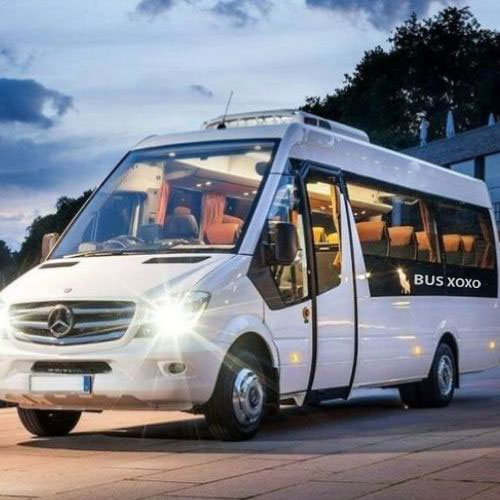
18 passenger minibus rental parked and ready for a group pickup
Exterior styling and paint differ by partner operator and city.

Most 18-seat minibuses are built on a heavy-duty cutaway chassis: a van-style cab up front, a purpose-built passenger body behind it. That design gives you standing headroom in the aisle, individual seats instead of van benches, and a ride that feels closer to a bus than a family vehicle. It also keeps the footprint small enough to pull into a winery lane, a church lot or a downtown hotel curb where a 45-foot coach would never fit.

The numbers on the right are typical ranges, not promises about one specific vehicle. Your written quote names the actual unit class assigned to your trip, and our coordinators will confirm any detail that matters to you, such as seat belts, a wheelchair lift or a particular screen setup, before you pay.

Typical 18 passenger minibus specifications
Passenger seats18, forward-facing, usually in a 2+1 layout with a rear bench
Who drivesA professional driver holding a commercial license with a passenger endorsement, included in every booking
Typical lengthAbout 25 to 30 feet, roughly two parking spaces end to end
Typical heightAbout 10 to 11 feet, too tall for most hotel and airport parking garages
BoardingOne front door with grab rails and two or three steps
LuggageA rear cargo area, overhead racks on some units, plus any empty seats
RestroomNone on board. Plan a stop every two to three hours
ClimateFront and rear air conditioning and heating
Common extrasUSB charging, a PA microphone, Bluetooth or aux audio, TV screens, Wi-Fi on select units

Why the height line matters more than you think

Group leaders often plan a pickup inside a hotel garage or an airport short-term lot, then discover the clearance bar sits around seven feet. A minibus will not fit under it. Choose a curbside pickup, a porte-cochere you have checked, or a coach lane, and read our parking and pickup guidelines before you share the meeting point.

Is 18 seats the right size for your group?

Count heads first, then count bags. A vehicle that seats everyone but leaves suitcases in the aisle is the wrong vehicle. Here is how the 18-seater sits between its neighbors.

6 to 14

Probably too big

Small teams, family airport runs and executive roadshows ride better in a Sprinter van or a 15-passenger van. They cost less per hour, park in more places and still come with a driver.

15 to 18

The right fit

A bridal party plus parents. A youth soccer roster with two coaches. A board retreat with spouses. This is where the minibus is clearly better than splitting into cars, and where a bigger bus would mean paying for empty rows.

If you are closer to 15, the three spare seats become bag space, which makes a real difference on airport days.

19 and up

Time to size up

Once the list passes 18, step up to a 25 to 30 passenger minibus, or jump to a 50-passenger charter bus if luggage bays and a restroom matter. Two minibuses can also work for split schedules.

Every person is a seat

Children, infants on a parent's lap and the photographer who joins halfway all count toward the 18. The driver does not. Commercial passenger vehicles are licensed for a fixed number of riders, and the driver will not depart with more people on board than the vehicle is rated for, so build your list carefully.

Leave a small buffer

Headcounts grow. A plus-one appears, a cousin flies in, an extra chaperone volunteers. If your list sits at 17 or 18 a week out, ask your coordinator about the next size up before it becomes a problem on the curb. Our guide to choosing a charter bus size and the explainer on how many seats are on a minibus go deeper.

The bag test: will your luggage fit?

A minibus usually runs out of luggage room long before it runs out of seats. There is no under-floor bay like the one on a 55-passenger coach. Bags ride in a rear cargo area behind the last row, on overhead racks where fitted, or on empty seats. That is fine for a wedding shuttle where guests carry a clutch, and a real constraint for an airport pickup where every traveler has a 28-inch suitcase.

Use the planner to get a rough answer. It treats a personal item as something that stays on a lap or under a seat, a carry-on as one unit of cargo space, and a full checked suitcase as about two and a half units. Every empty seat adds a little space back.

Three ways to make it work

Ask for a rear-luggage configuration. Some 18-seat units are built with a deeper cargo area or a removable last row. Your coordinator can request one when you book.

Split people and bags. For airport days with heavy luggage, a second small vehicle for bags only often costs less than moving everyone into a bigger bus.

Size up for long trips. Multi-day tours with suitcases for everyone belong on a coach with under-floor bays. Our note on the maximum weight a charter bus can carry explains why loading limits exist.

Luggage planner

A planning estimate, not a guarantee. Cargo space differs between models, so tell us your real bag count in the quote form.

A walk through the bus, front door to back row

Photos only tell you so much. Here is what your passengers will actually experience, in the order they experience it.

Inside an 18 passenger minibus showing individual seats and the center aisle
  1. The step-in

    Two or three steps with a handrail on each side bring passengers up to floor level. Guests in long dresses or with a walking cane will appreciate a driver who waits at the door rather than in the seat, and ours are briefed to do that. If anyone in your group uses a wheelchair, tell us at booking; lift-equipped units exist in many markets but have to be reserved specifically.

  2. The driver's station

    The driver sits up front on the left, separated from the passenger area by a partition or a low divider on most units. This is where the PA microphone lives, which makes the driver your tour guide for pickup announcements, and where the climate controls are, so ask the driver rather than fiddling with vents.

  3. The forward rows

    The first rows sit closest to the door and give the smoothest, least bouncy ride, which is why motion-sensitive travelers should board first. Seats are individual, usually padded high-backs, and many late-model units fit three-point or lap belts. Our article on the safest seat on a charter bus covers the trade-offs.

  4. The middle aisle

    On a 2+1 layout the aisle is offset to one side, wide enough to walk upright with a bag. Overhead parcel racks, where fitted, run above the seats for jackets and small backpacks. Keep the aisle clear while moving; drivers will ask, and it is the quickest route out for everyone.

  5. The rear bench and cargo area

    The last row is typically a bench of three or four. Behind it sits the cargo space for suitcases, coolers and gift boxes. On some units this row folds or is removed to create more cargo room, which is worth requesting for airport and tour bookings.

Standard on most units

  • Air conditioning and heating front and rear
  • Individual padded seats
  • Tinted windows
  • PA microphone for announcements
  • Interior lighting for night pickups

Ask for these when you book

  • USB or power outlets at each row
  • Wi-Fi hotspot
  • TV screens and a media input
  • Wheelchair lift
  • Removable rear row for extra luggage

Not sure which extras are worth it? The charter bus amenities checklist walks through each one, and the answer to whether charter buses have bathrooms explains why minibuses skip them.

Eight trips an 18-seater handles better than anything else

These are the bookings we see most often for this size, with the schedule shape each one usually takes. Use them as a starting point when you fill in the quote form.

Wedding guest shuttle

Typical booking: 5 to 7 hours, a loop between two hotels, the ceremony and the reception.

Eighteen seats suits the bridal party, close family and out-of-town guests who do not want to drive after the toasts. Run a single loop before the ceremony, park during dinner, then make two late return runs so early leavers are not stuck waiting. Give the driver the venue coordinator's number, since service lanes and parking spots are often assigned on the day. Pair it with our wedding bus rental planning help and the ideas in wedding transportation ideas.

Airport arrivals for a team or family

Typical booking: one-way transfer or a 3 to 4 hour window.

The driver can wait at a commercial pickup zone while the group collects bags, which is far simpler than coordinating six rideshares from a busy curb. Share flight numbers so the driver can follow delays, and send one person ahead to find the zone while others collect bags. Mind the luggage planner above. Our airport charter service and the guide on airport pickups explain how designated zones work.

Winery, brewery and distillery tours

Typical booking: 6 to 8 hours, three or four tasting stops.

Narrow farm roads and small gravel lots are where a minibus beats a coach outright. Nobody draws the short straw as designated driver, and the vehicle doubles as a secure place to leave purchases. Book tastings in advance and tell each venue a minibus is coming; some estates only accept groups with a reservation. If you are in Texas, start with Austin-area wineries for group tours.

Corporate offsites and client visits

Typical booking: a full day with a morning pickup and a dinner return.

Moving a leadership team as one unit keeps the conversation going between sessions and gets everyone to the venue on the same clock. A Wi-Fi unit turns the drive into working time, and the PA microphone is handy for a quick agenda briefing on the way in. See our corporate event transportation page and the benefits for corporate events.

Youth and club sports

Typical booking: a tournament day, or a weekend with a hotel stay.

A full roster plus coaches fits, and parents stop running a carpool rota. Equipment bags count toward luggage, so mention bat bags and hockey gear when you request a quote. Our sports team bus rental page covers tournament logistics, including hotel-to-field shuttles between games.

Church groups and retreats

Typical booking: a weekend retreat or a weekly ministry run.

Small groups, choir sections and youth ministries are often exactly this size. The driver handles the road while leaders handle the people. For weekly ministry runs, ask about a recurring booking so the same driver learns your stops. Read church van vs charter bus and our church bus rental service.

Bachelor, bachelorette and birthday nights

Typical booking: 4 to 6 hours across dinner and two or three venues.

When the plan is dinner, a show and a late venue, the minibus keeps everyone in one place without the noise and pricing of a party bus. If you do want lights and a sound system, compare the party bus; our charter bus vs party bus article lays out the differences. Either way, plan a fixed final pickup time so the night ends on schedule.

Campus visits, field trips and conferences

Typical booking: a school-day window or a conference shuttle loop.

Smaller class trips, honor societies and conference delegations ride well at this size. For larger student groups, a school bus may be the budget pick. Our piece on the benefits of a charter bus for school field trips covers chaperone ratios and planning. Schools should ask about seat belts and confirm the operator's paperwork with the district before signing.

Planning something not listed here, such as a casino day trip, a concert or festival run, or government and military transport? Browse every option on our group transportation hub or book a private bus rental for anything custom.

A real minibus day, hour by hour

It is easier to plan once you have seen a schedule that works. This is a composite of a typical Saturday wedding booking for 17 guests, built from the way these days usually unfold. Swap the stops for your own event and the shape still holds.

Notice where the time goes. The bus is on the clock from the first pickup to the final drop-off, including the evening hours when it is parked. That is why many couples book a single block that covers the ceremony and the late returns, rather than paying two separate minimums.

The numbers behind it

About 9 hours on the clock, roughly 45 miles driven, 6 trips between stops and zero guests driving home after the toasts. Ask us to quote it both ways, as one block or as split runs, and compare.

  1. Bus arrives at the groom's hotel

    Fifteen minutes early, as standard. The driver checks the curb, opens the door and confirms the headcount with your on-site contact. Nobody is waiting in a lobby wondering which vehicle is theirs.

  2. Wedding party boards

    Twelve people, a garment bag and two boxes of boutonnieres. Bags go in the rear cargo area, the photographer takes a front seat to shoot the arrival.

  3. Second pickup at the family home

    Parents and grandparents board. A grab rail and a patient driver make the two steps easy for older guests.

  4. Ceremony venue drop-off

    The bus pulls into the venue's service lane, unloads in under five minutes and moves to the parking spot the venue coordinator assigned.

  5. Short hop to the reception

    The ceremony site and reception are fifteen minutes apart. The same 17 people ride across, and nobody hunts for car keys in formal wear.

  6. First return run

    Grandparents and anyone with an early flight head back to the hotel. The driver returns for the second run.

  7. Final return run

    The last guests ride back together. The driver does a sweep for phones, shoes and the cake topper someone always forgets.

What an 18-passenger minibus costs, and why quotes differ

Minibus pricing is mostly about time. Operators charge by the hour with a minimum block, or by the day for longer trips, and the rate covers the vehicle, the driver, fuel and commercial insurance. What moves the number is the market you are in, the date and how many hours the driver is committed to you, including the time spent waiting between stops.

Booking typeTypical US range
Hourly rate with driverAbout $110 to $200 per hour
Minimum bookingUsually 4 to 5 hours on weekends, sometimes 3 on weekdays
Full local day (8 to 10 hours)About $900 to $1,800
One-way airport or city transferOften quoted as a flat fare or the hourly minimum
Multi-day out-of-town tripDay rate per day plus driver lodging

Ranges reflect typical market pricing and are not a quote. Your price is fixed in writing before you pay.

What pushes a quote up or down

City and season. Manhattan in December costs more than a Tuesday in Tucson. May and June are peak for weddings and graduations.

Day of week. Saturdays book out first. Weekday and Sunday trips often price lower.

Deadhead distance. If the nearest available bus is far from your pickup, travel time to reach you may be included.

Total hours, not driving hours. A driver waiting through a three-hour reception is still on the clock.

Overnight trips. You cover the driver's hotel room, and federal rest rules can shape the itinerary.

Extras. Tolls, parking fees and venue access charges are usually billed as they occur.

To see how these factors combine, read how much it costs to rent a minibus, how charter bus pricing works and round trip vs one way rentals.

Sample quote

Saturday wedding shuttle, 17 guests, 6 hours, suburban market

Minibus with driver, 6 h at $150$900
Fuel and commercial insuranceIncluded
Venue parking fee$25
Suggested driver gratuity (15%)$135
Estimated total$1,060
Per guestAbout $62

Illustrative example only. Gratuity is at your discretion; see how much to tip a charter bus driver. Deposit, change and cancellation terms are set out in our return and refund policy.

Compare the per-guest figure with what the same group would spend on parking, rideshares at surge pricing and the risk of someone driving home after a celebration. Our article on charter bus vs carpooling runs that math in detail.

Price my trip

How it stacks up against the next sizes

The useful comparison is not features in isolation. It is which vehicle wastes the least money for your headcount, bags and route.

Feature15-passenger van18-passenger minibus30-passenger minibus55-passenger coach
Seats14 passengers plus driver18 plus driver25 to 30 plus driverUp to 56 plus driver
HeadroomSit-down onlyStand-up aisle on most unitsStand-up aisleFull stand-up aisle
LuggageRear cargo, limitedRear cargo plus spare seatsRear cargo or small baysLarge under-floor bays
RestroomNoNoRarelyYes on most
Tight lots and drivewaysEasyEasy to moderateModerateNeeds a bus lane or large lot
Best forExecutive runs, small familiesWeddings, tours, teams, airport runsLarger wedding parties, school groupsLong distance, big events, tours
Relative hourly costLowestLow to midMidHighest per hour, lowest per seat

Two things the table cannot show: how your passengers feel after three hours, and how easy the driver finds your pickup points. Vans feel cramped on longer runs because nobody can stand up. Coaches feel effortless on the highway but struggle in suburban cul-de-sacs and small winery lots. The minibus sits between those extremes, which is exactly why it is the most requested size for event days that mix short hops with tight venues.

The coach column often surprises people: it costs more per hour but less per seat once you fill it. That is why groups of 35 and above almost always land on a full-size charter bus. For 15 to 18 people, though, paying for 40 empty coach seats rarely makes sense, and the minibus is the honest choice. For a premium experience at this size, ask about our executive charter bus.

Want the long-form version? Read minibus vs coach bus, charter bus vs Sprinter van, shuttle bus vs charter bus and the overview of types of charter buses. You can also browse the full vehicle lineup, including the minibus rental range and shuttle buses.

Where an 18-seater falls short

We would rather you book the right vehicle than the one on this page. These are the trips where we usually steer groups toward something else.

Long highway days

Over four or five hours of straight driving, the lack of a restroom and the firmer ride of a cutaway chassis start to show. A motorcoach with reclining seats and an onboard restroom is kinder on a cross-state run, as our guide to cross-country charter trips explains.

Everyone with big suitcases

Eighteen travelers with full checked luggage is the classic mismatch. The seats fit, the bags do not. Size up, or add a luggage vehicle.

Groups that might grow past 18

If your registration is still open, book the next size up and save the scramble. Moving down a size later is usually easier than finding a bigger bus on short notice, especially on peak-season Saturdays when larger vehicles are already committed.

A party on wheels

A minibus is quiet, practical transport. If the ride itself is the event, with lighting, a sound system and a lounge layout, a party bus is built for it.

Continuous campus or event loops

For all-day circulator routes with people hopping on and off, a shuttle bus with wider doors and standing room moves crowds faster.

Very small groups

Under about 11 people, you pay for empty seats. A Sprinter or passenger van with a driver is cheaper and just as comfortable, and it fits into more parking garages and hotel driveways.

Who drives, and how you can check

An 18-passenger minibus carries 19 people once you count the driver. Under federal rules, any vehicle designed to carry 16 or more people including the driver requires a commercial driver's license with a passenger endorsement. That one fact rules out the "rent it and drive it yourself" option, and it is why every BUSXOXO minibus comes with a professional driver.

BUSXOXO books trips with independent, licensed partner operators. Here is what that means for your group, and how you can verify any operator yourself, ours included. Our safety and trust standards and about us page explain how we choose partners.

Licensed drivers

Drivers hold a CDL with a passenger endorsement and are enrolled in federally required drug and alcohol testing. The FMCSA commercial driver's license overview explains the requirements.

Rest rules that shape your itinerary

10 hours driving, 15 hours on duty. Passenger-carrying drivers may drive up to 10 hours after 8 consecutive hours off, and may not drive after their 15th hour on duty. Long days with early starts and late returns can hit that limit, which is why some trips need a second driver or an overnight. The FMCSA hours-of-service summary has the detail.

Insurance that matches the vehicle

$5 million minimum for interstate trips. Federal financial responsibility rules require for-hire carriers operating vehicles that seat 16 or more passengers across state lines to carry at least $5 million in liability coverage, compared with $1.5 million for 15 or fewer seats.

Check any operator in two minutes

Ask for the operator's USDOT number, then look it up with the FMCSA Look Before You Book bus safety search. You will see operating authority, insurance on file and safety data. Our guides are charter buses safe and choosing the right charter company list more questions to ask.

Accessibility

If a traveler needs a lift or a securement position, request it when you book so we can source an accessible unit. The ADA.gov site explains the rights of riders with disabilities on private transportation.

From first message to final drop-off

Booking a minibus takes a few minutes. Getting the details right is what makes the day run smoothly, so here is the sequence and when each step happens.

  1. 2 minutes

    Send the basics

    Date, pickup and drop-off addresses, headcount, bag count and a rough schedule. The online booking form asks for exactly this.

  2. Usually the same day

    Receive a written quote

    An all-in hourly or day price, the minimum, and what is billed separately such as tolls or parking.

  3. When you are ready

    Confirm and reserve

    Accept the quote and pay the deposit to lock the vehicle. Weekends in May, June, October and December fill early.

  4. About 7 days out

    Share the run sheet

    Final addresses, stop times, a day-of contact and any access notes like gate codes or loading zones.

  5. 24 to 48 hours out

    Meet your driver

    You receive the driver's name and contact or the dispatch line, plus the vehicle details.

  6. On the clock

    Ride day

    The driver arrives early for the first pickup. Keep the contact phone on you for live changes.

How far ahead to book

Minibuses are among the first vehicles to sell out on busy weekends because so many groups land in the 15 to 18 range. Book as early as your date is firm. Short notice is often possible on weekdays; call us and we will check live availability with partners near your pickup. Our step-by-step on how to rent a charter bus covers the paperwork side.

Planning around the calendar

Demand for 18-seat minibuses rises and falls with the school year, wedding season and sports calendars. A little seasonal awareness gets you a better vehicle at a better price.

Spring

Graduations, proms and the start of wedding season mean minibuses book out on Fridays and Saturdays from April onward. Lock in graduation weekends as soon as the ceremony date is published, and give the driver the exact entrance for the venue, because campus roads close and reroute on big days.

Summer

Peak weddings, family reunions and youth tournaments. Air conditioning works hard in the South and Southwest, so ask for the bus to be cooled before boarding and keep water on board. National park trips are popular too; read charter bus rentals for national park tours for permit and parking notes.

Fall

Football, homecoming, leaf-peeping and corporate offsites. Game days create traffic around stadiums hours before kickoff, so build in a buffer and agree a post-game pickup point away from the crowd. Winery tours are at their busiest during harvest.

Winter

Holiday parties, ski trips and airport rushes. December weekends are among the hardest dates to find any vehicle. For mountain trips, ask whether the operator runs units with winter tires or chains, and allow extra return time if snow is forecast.

The group leader's day-of checklist

Whoever booked the bus usually becomes the person everyone asks. These ten habits come from the trips that run smoothest. Tick them off as you go; nothing is saved or sent.

0/10

tasks done

New to group travel? Our guides on how early to arrive and charter bus etiquette are worth sharing in the group chat, along with a few games for the ride.

Where groups book this minibus most

We arrange 18-passenger minibuses through partner operators across all 50 states. Each region has its own quirks, and knowing them up front saves time on the day. Find your state or city on the locations page.

Midwest

Conferences, college sports and winter weather. In cold months, ask the driver to pre-heat the cabin before pickup, and allow extra time for snow on the return.

The West and Southwest

Desert heat and long scenic drives. Air conditioning is standard, but bring plenty of water for park stops and expect fewer service towns between them.

Run a bus company and want to take minibus bookings? Learn about partnering with BUSXOXO.

18 passenger minibus questions, answered

Straight answers to what group leaders ask us most about this size. Still unsure? Call +1 (308) 304-6668 or send us a message. Our terms and conditions cover the fine print.

Can I rent an 18 passenger minibus without a driver?

No. A vehicle built to carry 16 or more people including the driver requires a commercial driver's license with a passenger endorsement, so self-drive rentals at this size are not something we offer. Every booking includes a professional driver, and the driver's time is part of your quote.

How much does an 18 passenger minibus rental cost?

Most US markets fall roughly between $110 and $200 per hour with a driver, with a 4 to 5 hour minimum on weekends. A full local day often lands between about $900 and $1,800. City, date, total hours and any overnight travel move the number. Request a quote for an exact, written price.

Is there a minimum rental time?

Usually yes. Weekend bookings commonly carry a 4 or 5 hour minimum, and some weekday trips can be booked for 3 hours. One-way airport and city transfers are sometimes priced as a flat fare. Your quote states the minimum clearly.

Does an 18 passenger minibus have a restroom?

No. Minibuses at this size do not have onboard restrooms. Build a comfort stop into the schedule every two to three hours, or step up to a coach if your route is long and stops are hard to plan.

How much luggage fits on an 18 passenger minibus?

With every seat full, plan on a carry-on or duffel per person in the rear cargo area. Full-size checked suitcases for all 18 usually will not fit. Use the luggage planner on this page, ask for a rear-luggage configuration, or add a separate luggage vehicle for airport days.

Are there seat belts on the minibus?

Many late-model 18-seat minibuses have lap or three-point belts at every seat, but equipment varies by vehicle and operator. If belts are a requirement for your group, for example for a school or youth trip, say so when you request a quote so we can confirm before you book.

Can the minibus take us out of state or on a multi-day trip?

Yes. Interstate and multi-day trips are common. You will cover the driver's lodging for overnights, and federal hours-of-service rules limit driving to 10 hours after 8 consecutive hours off duty, so very long days may need a second driver or an extra night.

Can the minibus pick us up at the airport?

Yes, at the commercial vehicle or charter pickup zone each airport designates. Share flight numbers so the driver can track delays, and plan for a short wait while the group collects bags.

Is a wheelchair-accessible minibus available?

Lift-equipped minibuses exist in many markets but must be reserved specifically. Tell us how many travelers need a securement position and whether anyone can transfer to a standard seat, and we will source an accessible unit where available.

Can we bring food, drinks or decorations on board?

Snacks and non-alcoholic drinks are generally fine. Alcohol policies depend on the operator and state law, so ask before you plan around it. Decorations must not use tape or adhesive that damages the interior, and anything that blocks windows or the aisle is not allowed.

How far in advance should we book?

Two to three weeks is often enough for weekday trips. Weekends need four to six weeks, and peak dates such as May and June wedding and graduation weekends or December holiday parties can sell out eight to twelve weeks ahead.

Is the driver's gratuity included?

Usually not. Tipping is at your discretion, and many groups give around 10 to 20 percent of the trip cost. If you would rather have it built into the invoice, ask your coordinator when you book.

What happens if our plans change?

Contact us as soon as you know. Time and stop changes can often be accommodated before the trip, and the driver can adjust on the day within the booked hours. Deposit and cancellation terms are explained in our return and refund policy.

Can we add stops during the trip?

Yes, within your booked hours. Planned stops should be on the run sheet so the driver can check parking at each one. Unplanned stops on the day are usually fine if there is a safe place to pull over and they do not push the trip past the booked time or the driver's legal duty limit.

Can we book the same minibus for several days or a recurring schedule?

Yes. Multi-day events, week-long tours and recurring runs such as a weekly church service or a staff shuttle can be booked as a package. Recurring bookings often keep the same driver, which helps with regular stops and passengers who appreciate a familiar face.

What happens if the bus breaks down or runs late?

Drivers report delays to dispatch and to your day-of contact as soon as they know. If a vehicle has a mechanical problem, the operator arranges a replacement where one is available, and our support team works the phones with you until your group is moving again. Keep our number handy on the day.

Can kids ride on the minibus, and do we need car seats?

Yes, children ride regularly on school trips, family events and youth sports. Car seat rules for buses differ from those for passenger cars and vary by state, so if you plan to bring child seats, tell us the ages and number of children when you book and we will confirm what the vehicle can accommodate.

What is the difference between an 18 passenger minibus and a Sprinter van?

A Sprinter-type van typically seats up to about 14 with a lower roofline and less luggage room. The 18-seat minibus is built on a larger body with a taller aisle and individual seats, so it suits groups of 15 to 18 better while staying compact enough for small lots.

Eighteen people, one bus, zero carpool math

Tell us the date, the stops and your headcount. You will get a written price for an 18-passenger minibus with a professional driver, and a real person to call if the plan changes.

Corporate · Weddings · Group Travel

Get your charter bus quote in 2 minutes

+1 (308) 304-6668 Toll-Free · 24/7 support Get Free Quote

Toll-Free · Available 24/7